


That Fit Friend is reader-supported and may earn commissions through affiliate links. We also work with select brands on paid editorial partnerships. These relationships do not influence our testing methodology, product ratings, or recommendations. Read more here!
Nike has two very different training shoes sitting in a lot of the same shopping tabs right now, the Nike Metcon 10 and the newer Nike Hybrid RN. I get why people cross-shop them. Both can live in a gym, and both will handle some running if you take the marketing at face value.
Once you actually train in them, they are not close. The Metcon 10 is a stability-first shoe built for lifting and CrossFit, with a reworked Hyperlift plate in the heel and a 4mm drop. It can get through short intervals if you stay on your forefoot and keep the distances short. The Hybrid RN is a more run-first hybrid with ReactX foam, an Air Zoom unit in the forefoot, and a 7mm drop. That’s the pair I’d look at for HYROX, cardio-heavy classes, and runs in the 1 to 3-mile range. It’s also the heavier shoe, 12.9 oz versus 11.80 oz in a size 10.
Pick the wrong one for your split and you’ll feel it pretty quickly. Load the Hybrid RN too heavy and it starts to compress and pitch you forward. And if running is a real part of your week, the Metcon 10 will beat your heels up, especially outdoors. Here’s which shoe I’d go with based on how you train.



Performance Quick Hits
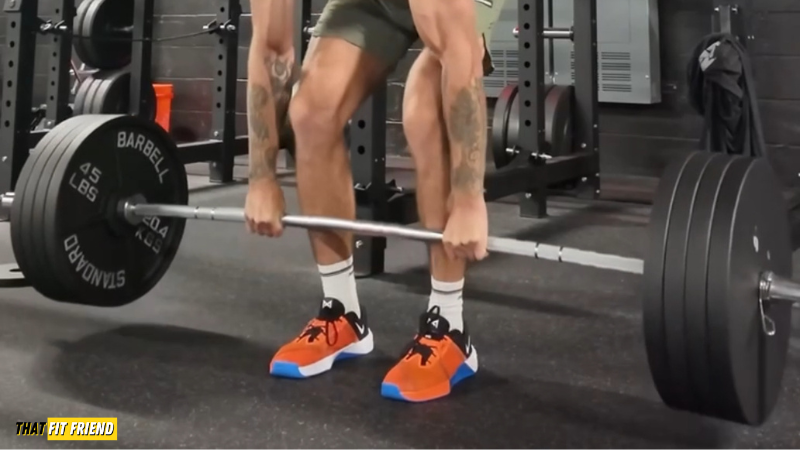
- Best for Heavy Lifting & Strength Stability: Nike Metcon 10. I’ve deadlifted 405 lbs in the 10, pushed leg presses past 450 lbs, and squatted around 315 lbs with no stability issues. The lifting threshold I have on this shoe is about 455 lbs. The Hybrid RN hits a wall around 225 to 235 lbs on back squats, when the ReactX foam, Air Zoom unit, and 7mm drop start to sink and dump you onto your toes. The Metcon 10’s lower 4mm drop does a better job of keeping you planted.
- Best for Running & Cardio Intervals: Nike Hybrid RN. 400s, 800s, and 1k repeats feel smooth and legitimately runnable in this shoe, and I’ve used it for road intervals out to 3 miles. The Metcon 10’s sweet spot is 400 to 1,000 meters, and only at a faster pace with a forefoot strike. Past 1,000 meters at one time, I would not choose the 10.

- Best for Cross-Training, CrossFit & Classes: Use-Case Dependent. Lifting-heavy CrossFit and cutting? Go Metcon 10. Orangetheory, F45, or HYROX-style days with sleds, wall balls, and running intervals? The Hybrid RN is the better tool.
- Best for Outsole Traction & Sled Work: Nike Hybrid RN, with a caveat. The Hybrid RN’s lugged outsole was the standout for me on heavy turf sled pushes. The Metcon 10 grips gym floors, platforms, and machines well, but that tapered, low-volume toe box is the first thing I notice in deep toe extension when I push sleds in them.
- Best for Foot Shape: No clean winner. The Metcon 10 is wider through the base of the forefoot, but the toe box taper, low-profile upper, and aggressive arch still feel snug if you like a boxier shape. The Hybrid RN has more forefoot room and vertical volume, but you have to lace it tight or you’ll slide forward into the bumper.

Nike Hybrid RN
Nike Metcon 10

Sizing and Fit Comparison
About My Feet: I have a normal arch/instep and my feet come in at an E/EE width. The length of my left and right foot are consistent with one another, and I size as a true US 10 for most companies’ sizing charts.
Nike Metcon 10: Fits true to size for me. I’d go with the same size you wear in Nike, Reebok, Adidas, and PUMA shoes.
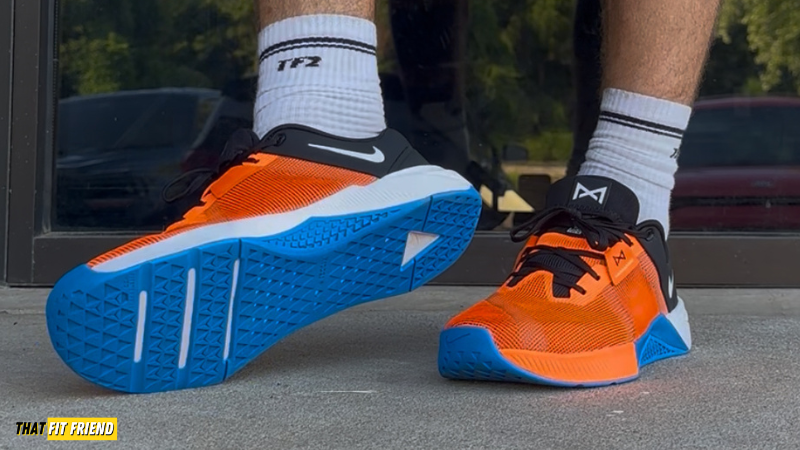
- Narrow, medium, and E-width feet should be fine true to size; 2E+ can start there too, but expect a snugger fit. The forefoot is built wider at the base, but the toe box taper and low-volume upper make it feel snug in deep toe extension, and the arch is pretty aggressive.
- It breaks in a bit, but if you don’t love arch in your trainers, buyer beware. I also had a little heel slip while rowing during a HYROX workout; tighter laces stopped it.
Nike Hybrid RN: I went true to size and they fit fine when laced. Leave them a little looser and you start to notice toe jamming, like you’re sliding to the end of the toe box.

- I think that’s the 7mm drop plus the lack of midfoot security. Narrow and medium-width feet can stay true to size, but be ready to lace-lock them.
- For E to 2E feet, Nike officially recommends sizing up, and I’d listen if you like wearing your shoes a little looser. A half-size was enough for my E/EE width. Don’t go up too much or you’ll run into heel slip. Try them on indoors, tie them tight, and do a few box jump squats and lunges first.


Performance Face-Off
Lifting & Strength Work
The Metcon 10 is the clear pick for heavy lifting, and it isn’t close.
I’ve trained up to 405 lbs on deadlifts in the 10, pushed some leg presses past 450 lbs, and squatted around 315 lbs with no stability issues. Nike reworked the Hyperlift plate so it sits just under the base of the heel, with regular foam at the back of the heel.


The Hybrid RN is fine for lighter barbell work, dumbbell complexes, and machine accessories. On back squats approaching 225 to 235 lbs, the softer ReactX foam, the Air Zoom unit, and that 7mm drop caused me to sink and roll forward onto my toes. I felt a similar forward rock during front rack walking lunges up to 205 lbs, and on high-rep wall balls that same pitch dumped my weight into my knees. Keep heavy squat and deadlift days in the Metcon 10.
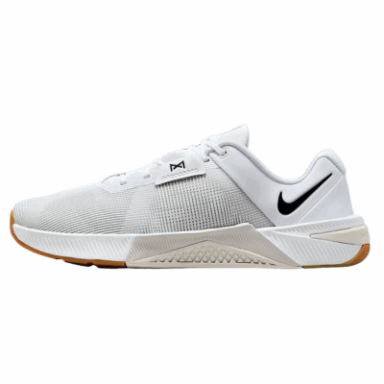
Nike Metcon 10
$155
Pros
- Stable for lifting
- Athletic feeling upper
- Good for arch support lovers
Cons
- Not flat feet friendly
- Still lacks versatility
- Upper volume is hit or miss
Best For
- Lifting
- CrossFit
- Cross-Training
- Arch Support Lovers
- Low Volume Feet
Specs
| Heel-to-Toe Drop | 4mm |
| Weight | 11.80 oz (size 10) |
| Width | Medium/Wide |
| Lifting Threshold | ~455 lbs |
| Run Distance Threshold | <1,200 at one time |
Cross-Training, Classes & Versatility
Go Metcon 10 for strength-biased CrossFit; go Hybrid RN for cardio-heavy classes and HYROX.
If your workouts lean toward strength, barbell cycling, and some jumping or cutting, the Metcon 10 has the edge. The upper is a little more low-profile and gives you a nice locked-down feeling for CrossFit and athletic-focused sessions. That said, the heel will still beat you up a bit on heel-striking movements like short interval runs and broad jumps.
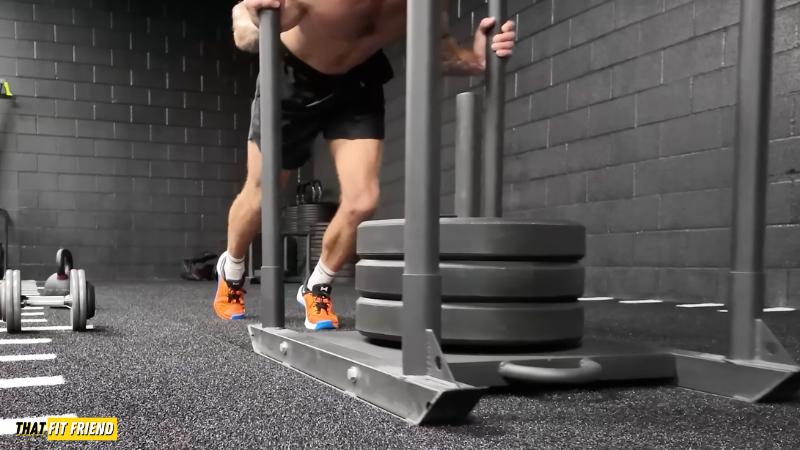
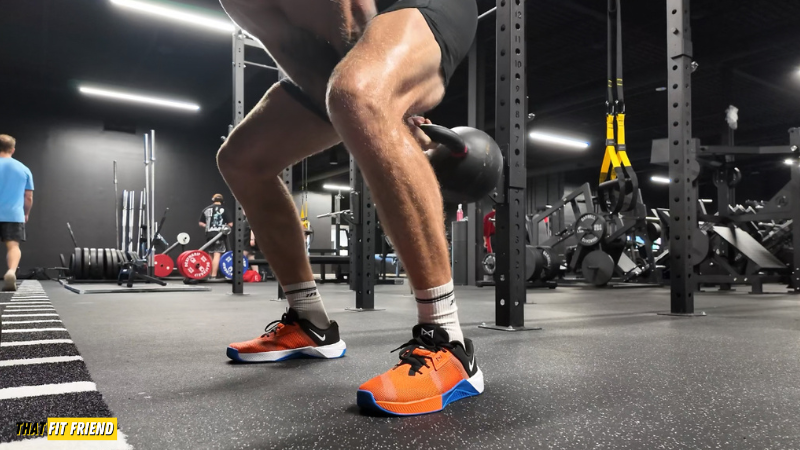


If your week looks more like HYROX prep, F45, Orangetheory, or cardio-heavy metcons, the Hybrid RN is the better athlete. When I pushed heavy sleds on turf, those sharp lugs bit into the carpet with no slip, and the Air Zoom pod gives you that springy forefoot pop people liked in the old Metcon Turbo on box jumps and skater hops. You do have to yank the laces down tight, or your foot will slide forward on deceleration.
Short Runs & Cardio Intervals
The Hybrid RN is in a completely different league for running.
On 400m, 800m, and 1k repeats, the Hybrid RN feels smooth, fast, and pretty fluid. The 7mm drop encourages some forward momentum, and the ReactX foam takes the harsh bite out of pavement and curved treadmills. At 12.9 oz in a size 10, though, it is on the heavier side for a running shoe, and past 3 continuous miles that extra weight started to feel a little clunky. The Metcon 10 is actually lighter at 11.80 oz, with a lower 4mm drop, but that doesn’t make it the better runner.
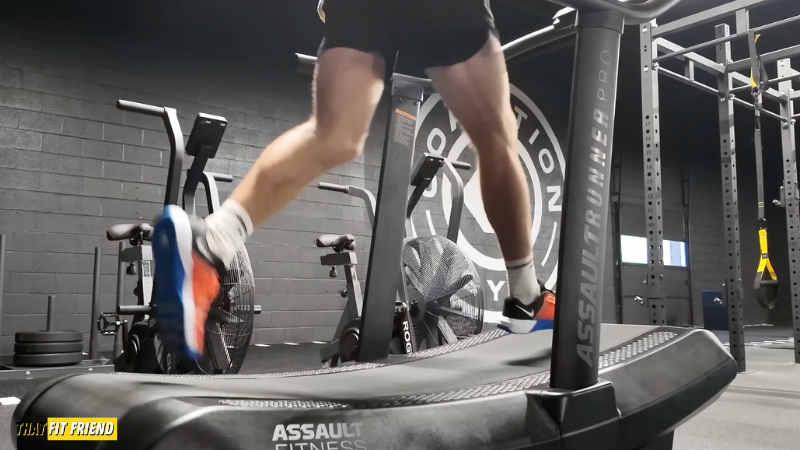

Anyone who says you can run comfortably in the Metcon 10 is either lying to you or trying to sell you a shoe they haven’t actually trained in. You can run in the 10. That does not mean you’re going to be comfortable. If I have to wear the 10 in a running workout, the sweet spot is about 400 to 1,000 meters, at a faster pace, with a forefoot strike, preferably on a treadmill or an Assault Runner. Outdoors or as a heel striker, I think you’ll be super uncomfortable. Past 1,000 meters at one time, the midsole density and the Hyperlift plate are a no-go for me.
Nike Hybrid RN
$145
Pros
- Great for Hybrid Classes
- Bouncy Midsole
- Good Outsole Grip
Cons
- Sizing Is Odd
- Upper Security Is Lackluster
Best For
- Cardio Classes
- HIIT
- Light to Moderate Strength
- Short Runs (<3 miles)
Specs
| Heel-to-Toe Drop | 7mm |
| Weight | 12.9 oz (size 10) |
| Width | Medium |
| Lifting Threshold | ~225 lbs |
| Run Distance Threshold | 3 mi |
ALTERNATIVES
Daily Wear & Walking Comfort
If you want one shoe for the gym and then the rest of the day, I wouldn’t make either of these my first pick.
I purposely wore the Metcon 10 for multiple days while working at my shoe store. They’re too dense and too snug in the toe box and midfoot for long walks and standing around, and I kept taking my feet out to give them room to breathe.
The Hybrid RN feels softer underfoot, but you can’t really slip it on loose for errands. When I wore it loosely, the 7mm drop and the compressible forefoot kept sliding my foot into the front bumper. Sizing up a half-size, like Nike recommends, helps that toe jam. Even then, I still wouldn’t call it a set-and-forget walker.


Construction Differences
Upper
The Metcon 10’s upper is a reinforced mesh in the forefoot and midfoot, with haptic overlays covering the medial side of the forefoot. I like that for burpees, where that part of the shoe usually gets shredded. The tradeoff is that those overlays add some bulk and keep the upper from stretching much as you break them in, so the lockdown you feel early on doesn’t really loosen up.


The Hybrid RN uses a more open engineered textile mesh with synthetic overlays from the medial and lateral forefoot back toward the heel, and a firm rubberized toe bumper that takes the scuffs on burpees and planks. That mesh breathes better than the Metcon 10’s, and the extra vertical volume makes it feel less clamped-in on runs and longer conditioning pieces. You’re getting durability more from the bumper than a reinforced forefoot, so you get abrasion protection without the same locked-down structure.
Midsole
The Metcon 10 uses React foam, a Hyperlift plate in the heel, and a 4mm drop. The Hybrid RN uses full-length ReactX, an Air Zoom unit under the ball of the foot, and a 7mm drop. That 3mm gap is a big part of why the Metcon 10 feels more planted under a barbell and why the Hybrid RN feels more eager to roll you forward on a run. The Hybrid RN is also heavier, 12.9 oz versus 11.80 oz in a size 10, but that extra cushioning is still why it runs better and lifts worse once the load climbs.


Outsole
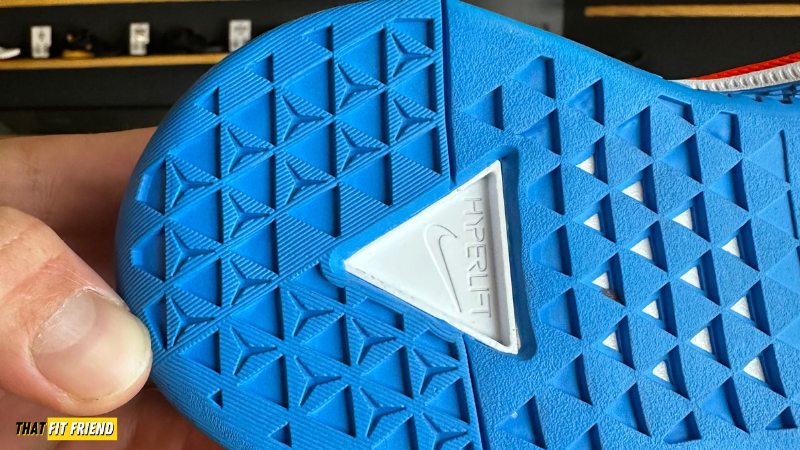
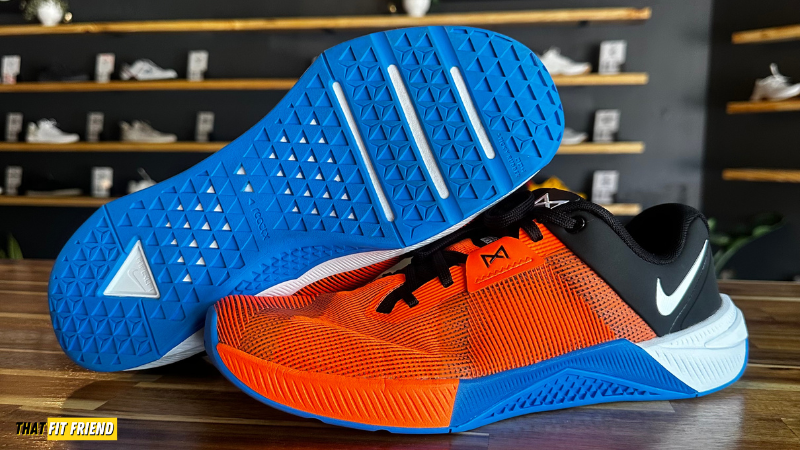
The Metcon 10’s outsole was reworked around a triangle tread pattern, with forefoot flex grooves and small triangle cutouts in the midfoot to cut weight. That larger triangle in the heel is the Hyperlift plate. The reworked lugs bite well on rubber gym floors, wooden platforms, and machines, and I didn’t have slippage issues. Nike dropped the bulky rubber rope guards on the medial and lateral midfoot, which were largely unneeded, and the extended outsole wraps still give just as much bite without the extra bulk.


The Hybrid RN uses a heavy-duty, high-traction rubber with deep, sharp lugs in the forefoot and heel that bite into turf, rubber mats, and dirt. A rigid, X-shaped rubber midfoot bridge adds support and torsional integrity, and flex channels in the forefoot let you extend your toes on sprints and lunges. That full-coverage rubber held up well for heavy sleds and outdoor work, and the wider outsole helped me stay planted on lateral landings. On treadmill and pavement, traction is fine, but the structured rubber base can feel clunky on longer runs.


Buy the Nike Metcon 10 If:
- Your training is strength-biased and you regularly squat or deadlift at loads the Hybrid RN won’t support.
- You want a CrossFit and lifting shoe first, with some jumping and cutting, and you like a low-profile, almost cleat-like upper. If you loved the fit of the Metcon 3 through 5, this is the closer of the two.
- You like a little arch support and have a medium to E-width foot. This is not the pair I’d start with for flat feet or for 2E+ athletes who want a rounded, anatomical toe box.
- You can keep running to short 400m to 1,000m intervals, preferably on a treadmill or Assault Runner, and you’re okay staying on a forefoot strike.
Buy the Nike Hybrid RN If:

- Your week is a hybrid blend of running and moderate lifting, or you’re training for HYROX and need one shoe for 1k repeats, wall balls, and heavy turf sleds.
- You take cardio-biased classes (Orangetheory, F45, circuit-style) and want a bouncier, more runnable trainer than a Metcon.
- You liked the Air Zoom pop in the old Metcon Turbo, or you prefer a higher drop that pitches you forward a bit, especially if ankle mobility limits you on wall balls and thrusters.
- You have a little more width or vertical volume to account for, and you’re willing to lace the shoe tight, or size up a half-size like Nike recommends, so you don’t slide into the toe bumper.
Final Remarks: Which Nike Trainer Wins?
There isn’t a single winner here. It all depends on how you train.
If your workouts revolve around moving heavier weights, locking your foot down for CrossFit, and sprinkling in short cardio bursts, the Metcon 10 is the more stable, more “Metcon” shoe. It’s a clear step up from the 9, but it is still not a running shoe, and it is still a hard pass for all-day wear.
If running is a real pillar of your training (1k repeats, treadmill blocks, 2 to 3-mile efforts) and your lifting stays light-to-moderate, the Hybrid RN is the far more runnable, bouncy option. Just don’t expect it to replace a dense lifting shoe once you start loading a bar past the mid-200s.
For my Nike fans, I think the most honest answer is the one I already gave in the Hybrid RN review: these two can complement each other. Metcon 10 for heavy, strength-biased days. Hybrid RN for classes, HYROX, and anything with real running in it.
If you have additional questions about sizing or which model fits your weekly workout split best, drop a comment below!




Add a Comment