

That Fit Friend is reader-supported and may earn commissions through affiliate links. We also work with select brands on paid editorial partnerships. These relationships do not influence our testing methodology, product ratings, or recommendations. Read more here!
It has been about two years since Nike updated the Metcon, and I know I’m not alone when I say I’ve been patiently (eh…in reality, impatiently) waiting for the new model. Now, a decade deep, I was curious what Nike would do with the Metcon 10, especially after the 9 was largely a swing and a miss, in my opinion.
I think, like many, my main hopes with the Metcon 10 revolved around whether they’d take this shoe back to its roots. To put it bluntly, the older Metcons slapped and the newer models keep trying to be masters of all, only to end up being masters of none.
For example, the 9 was largely overengineered for most gym-goers — I know some of you reading this love that shoe, and no shade there — it felt bulky, lacked breathability, and was far too dense to tackle highly versatile workouts.
The good news is that the Metcon 10 is a step in the right direction for this shoe line. It has remnants of the older Metcons in terms of fit. It also comes with better versatility, which I’ll cover in my performance section below. The bad news is that I think there will still be some issues with its sizing, and it hasn’t fixed everything that plagued the 9.
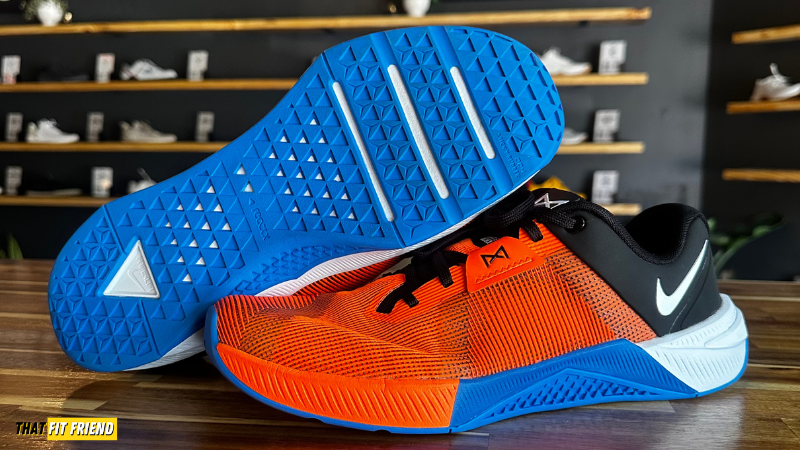

Nike Metcon 10
$155
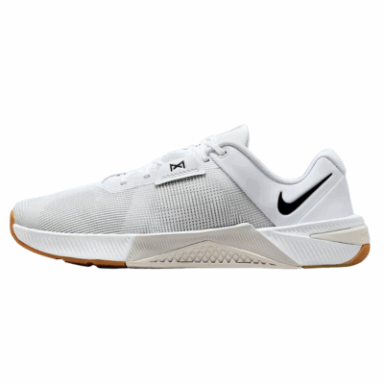
Pros
- Stable for lifting
- Athletic feeling upper
- Good for arch support lovers
Cons
- Not flat feet friendly
- Still lacks versatility
- Upper volume is hit or miss
Best For
- Lifting
- CrossFit
- Cross-Training
- Arch Support Lovers
- Low Volume Feet
Specs
| Heel-to-Toe Drop | 4mm |
| Weight | 11.80 oz (size 10) |
| Width | Medium/Wide |
| Lifting Threshold | ~455 lbs |
| Run Distance Threshold | <1,200 at one time |
Who Should Buy the Nike Metcon 10?
I’ve had a lot of asks on YouTube and Instagram if this shoe is worth upgrading to. Here’s who I think they’ll be best for. For the record, if you EVER have questions about upgrading or switching shoes, feel free to comment below or reach out to me personally.
- You LOVED the older Nike Metcon’s fit. More specifically, you loved the Metcon 3-5’s fit. The Metcon 10 has a low-profile upper which gives them that classic, sporty and athletic feel and fit that some love from Nike.
- You need a training shoe primarily for lifting with some CrossFit and cross-training sprinkled in. Similar to the 9, the Metcon 10 does have a larger bias towards stability with its construction. If your asks primarily revolve around heavy strength and power work, then the Metcon 10 can be a solid option to explore.
- You like a little more arch support in your trainers and have a medium to E-width foot. This shoe’s arch is fairly pronounced, giving it a nice degree of support for arch lovers, and in my opinion, its width will resonate best with D-E foot widths.
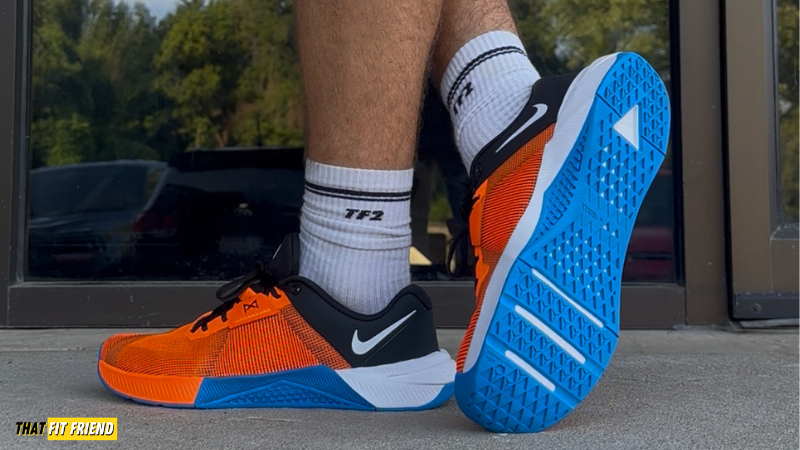
Who Shouldn’t Buy the Nike Metcon 10? (Alternatives)
While the Metcon 10 is improved over its predecessors, I still don’t think it’s a shoe that will work for everyone. Is it in my top 5 trainers? It’s clawing its way there slowly — it just wasn’t as much of an instant hit that I had hoped for.
- Extra wide feet, think 2E+ width feet. Here’s the thing, Nike languages this model as being wider, and it is through the base of the forefoot. However, when you factor in the toe box taper and the low-profile upper, you have a snugger fit that I don’t think will work for athletes who love boxier, more rounded toe boxes.
- Options that I’ve reviewed with more “anatomical” toe boxes:
- Inov8 F-Lite
- Born Primitive Savage 1
- Flux Graphene Trainer.
- Options that I’ve reviewed with more “anatomical” toe boxes:

- Flat feet. Just don’t…and if you do…keep your pair in fresh condition in the event you need to return them. I have a “normal” instep/arch and don’t normally mind arches in training shoes, but I picked up on the 10’s arch right away and I could see it bothering flatter feet or athletes who don’t love anything too aggressive pressing into their medial midfoot. It breaks in a bit, but not that much.
- You want a training shoe that offers more range for running intervals and athletic workouts. The 10 is more versatile, no doubt, but it’s not the answer for athletes whose workouts are heavily programmed with short runs, a lot of jumping, and some lifting, and don’t have a need for a shoe with more CrossFit-centric features.
- Options that I’ve reviewed with more versatility for generalists:
- Nike Free Metcon 6 (do-it-all shoe)
- RAD ONE V2 (do-it-all shoe)
- Inov8 F-Fly (hybrid option)
- Adidas Rapidmove ADV 2 (HIIT option).
- Options that I’ve reviewed with more versatility for generalists:
Fit and Sizing Suggestions
About My Feet: I have a normal arch/instep and my feet come in at an E/EE width. The length of my left and right foot are consistent with one another, and I size as a true US 10 for most companies’ sizing charts.
Fit Breakdown:
- Narrow (<D) feet: True to size.
- Medium (D) width: True to size.
- E width feet: True to size.
- 2E+ width feet: True to size, but expect a snugger fit.
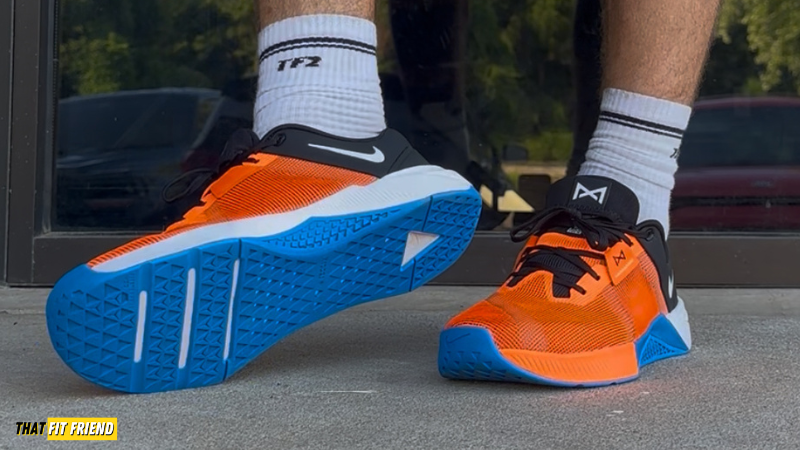
In all of my reviews, I purposely buy a size 10 (unless a company specifies otherwise) to assess how a shoe fits compared to its peers. The Metcon 10 does fit true to size for my traditional US size, and if you currently wear Nike shoes, go with the same size in the 10 in the shoes you currently wear.
I’d suggest sizing the Metcon 10 the same as your Reebok, Adidas, and PUMA training and running shoes. The base of the forefoot of this shoe is built to be wider so it should accommodate most foot widths from E/2E and down relatively well, especially if that’s where you desire width in your trainers.
Metcon 10 Toe Box and Arch Thoughts
As mentioned above, the toe box does have a fairly significant taper to it, and I almost found the taper to be a little more aggressive than the Metcon 9. Despite being languaged as “wider” on Nike’s site, I still find this shoe a little snug in the toe box.
My theory is that the low-volume upper blended with the taper is what contributes to this shoe’s toe box snugness, because you feel it most when going into deep toe extension when pushing sleds.

There’s also a fairly significant arch in the 10. The 9 didn’t have a ton and I know some didn’t love that, but I almost feel like Nike now went in the complete opposite direction to compensate for that. As stated above, I find the arch to be pretty aggressive in this shoe. It does break in, but I can’t see it getting to the point where you won’t notice it at all, so if you don’t love arch in your trainers — buyer beware.
Does the Metcon 10 Have Heel Slip?
Another question that I’ve been asked about with the Metcon 10 revolves around heel slip because that was an issue that plagued earlier Metcons for some. The good news is that I don’t think slip will be as prevalent in the 10 as older models.
The bad news is that I don’t think it’s a shoe where it won’t be present at all. This shoe has a lower boot and stiffer construction, to not have it all for everyone would be wild. In my experience, it was super random and I never really have slip issues with my trainers, but I did notice my heel popping out in the 10 when rowing for one of my HYROX workouts.

Heel slip = When you find your heel continually sliding and popping out of your shoe. To fix this, you’ll typically want to either 1) try a runner’s knot (learn how to here), or 2) grab a better fitting shoe for your needs.
It honestly caught me by surprise and it prompted me to crank my laces tighter which I didn’t love because this model has that thicker third eyelet that creates an interesting tightness on the bottom and top of the midfoot. Once I did this, the slip stopped, and I adjusted to the lace tightness.
All that said, if you battled heel slip in the old Metcons or if that issue made them unwearable for you, then you may be in the camp of athlete that may have that issue with the 10 as well. If you do decide to try and buy knowing this, I’d suggest trying them on in your home and doing some wall-referenced deep knee flexion isos (vid here on YouTube from my buddy Josh for reference) to see if slip may be present for you.
Performance Assessment
Great for Lifting: 8.5/10
Lifter rejoice, Nike reworked the Hyperlift plate in this shoe. The Hyperlift plate was initially brought into the Metcon line in the 7, and it’s since been a feature that has created some polarization in the training shoe scene. For example, I’m not a fan of it and I don’t think trainers need plastic in their heels to be stable, but some do love it and I acknowledge that.
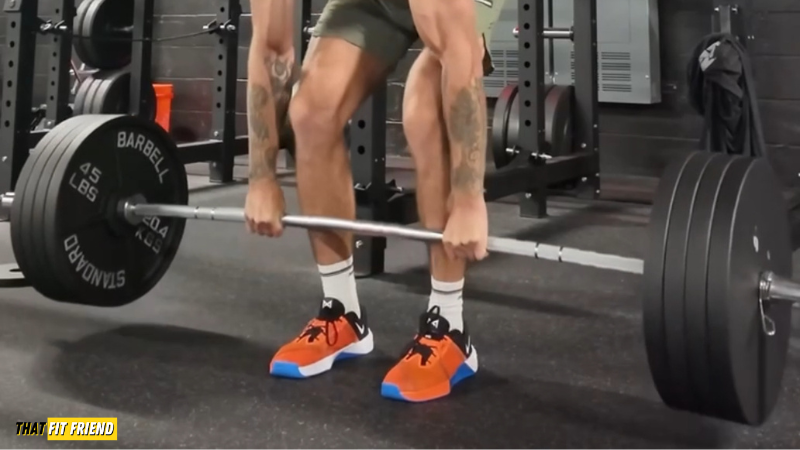
Author’s note: For my new Metcon buyers, the Hyperlift plate is a piece of TPU (plastic) that Nike inserts into the heel to promote stability when lifting.
The plate in this model has been reworked to sit just under the base of the heel, and now the back of the heel utilizes a traditional foam midsole. I do like this better than the 9 because it increases the forgiveness of heel striking movements while upping stability for those who love the Hyperlift plate.
In terms of lifting, I’ve trained up to 405 lbs in deadlifts with this shoe and have pushed some leg presses past 450 lbs and squats around 315 lbs with no stability issues. The React midsole is more responsive than the 9’s dual-density foam, but it shouldn’t compromise overall stability under heavy weights.

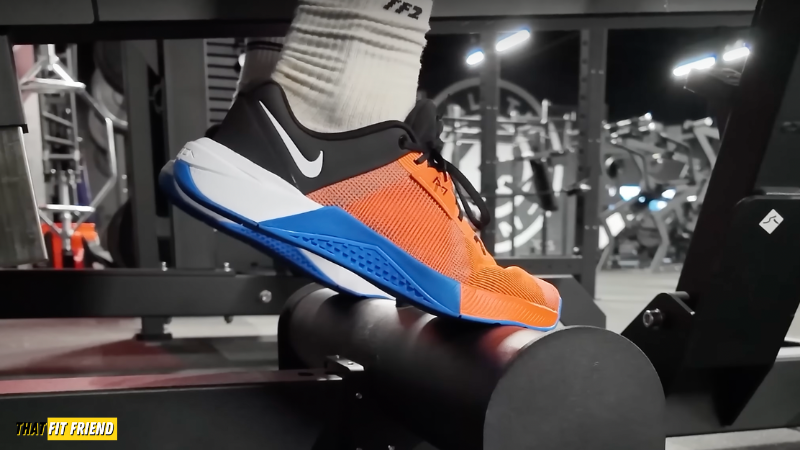
For heavy squats, power cleans, and lower body days, I think most lifters will enjoy how the Metcon 10 performs. The outsole also has good grip so slippage shouldn’t be an issue no matter the surface you train on. The reworked lugs give you a nice bite on rubber gym floors, wooden platforms, and machine surfaces.
Stable Option for CrossFit/Cross-Training: 7.5/10
The 10 is definitely improved for CrossFit and cross-training compared to the 9. For CrossFit, going down the line, here’s where this shoe has been improved. First, the React midsole has more pliability, which has been a nice update for box jumps and double-unders.
Second, Nike got rid of the bulky rubber rope guards on the medial and lateral midfoot, which were largely unneeded. This has helped cut down on the Metcon 10’s weight and its breathability and durability (with this feature) have improved slightly. This model still has extended outsole wraps and they provide just as much bite without adding unneeded bulk to the shoe.
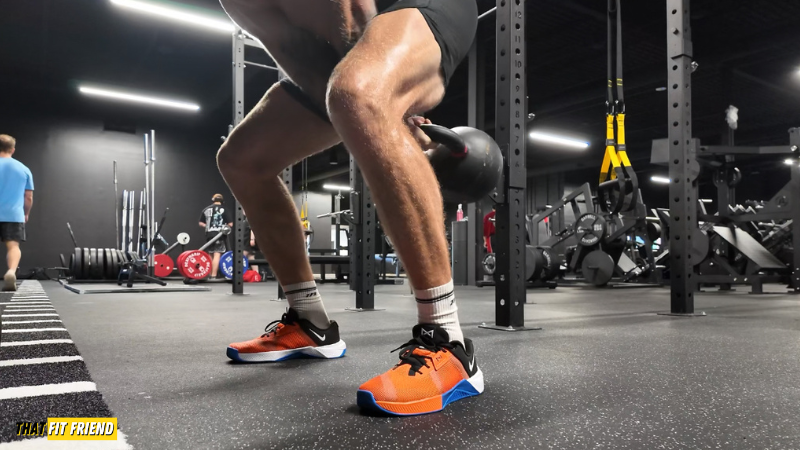
Third, the reworked Hyperlift plate and heel make this shoe a little more forgiving compared to the 9. It’s still more on the stable side of the stability and versatility spectrum, but it’s better. For more versatility in CrossFit context, go F-Lite, RAD ONE V2, or TYR CXT-2.
In the context of cross-training, the upper security and outsole grip are what give the Metcon 10 its sporty feel. The low-profile upper gives this shoe a cleat-like fit, and if you prefer that for your workouts that include jumping, cutting, and explosivement movements, then you’ll enjoy the lockdown that you get in the 10.
There are also features like the lace tuck on the tongue, which could be novel and useful for some when cross-training if you like getting your laces out of the way. I never really care for or us this feature, but some may think it’s neat. Other shoes like the Haze Trainer have been using a pocket on the tongue forever, and it’s always one of those “can be nice to have” but not necessarily needed features.
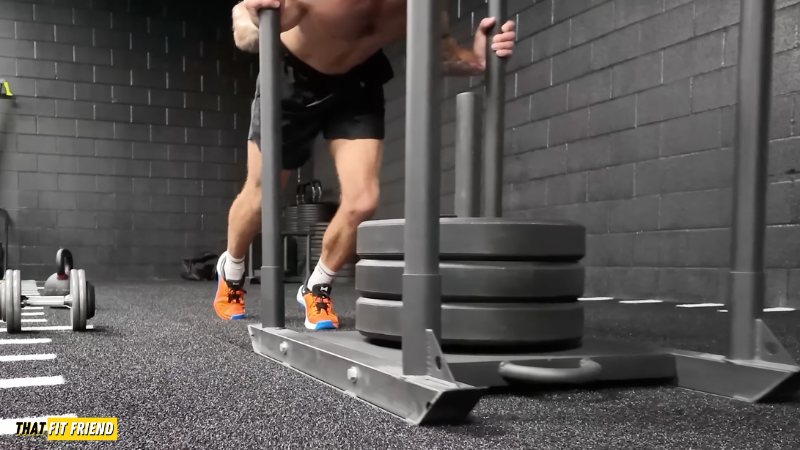
Despite being improved, I still have gripes with the 10 for CrossFit and cross-training and those revolve around the fit and its inability to transcend out of its stability-focused box. The heel is still going to beat you up a bit if you have any form of heel striking movements in your workouts (think: short interval runs for my heel striking friends or broad jumps) and the low-profile fit can be so-so for general comfort in these settings.
No-Go for Short Runs: 6.5/10
Anyone who says you can run comfortably in the Metcon 10 is either lying to you or trying to sell you a shoe they haven’t actually trained in. You can run in the Metcon 10, sure, but that doesn’t mean you’re going to be comfortable.
For me, if I have to wear the 10 in a workout that includes running, the sweetspot with this shoe is around 400-1,000 meter distance intervals. At this distance, I’m usually running at a faster pace and I’ll be adapting a forefoot strike, and in doing so, the 10 can be passable to an extent.
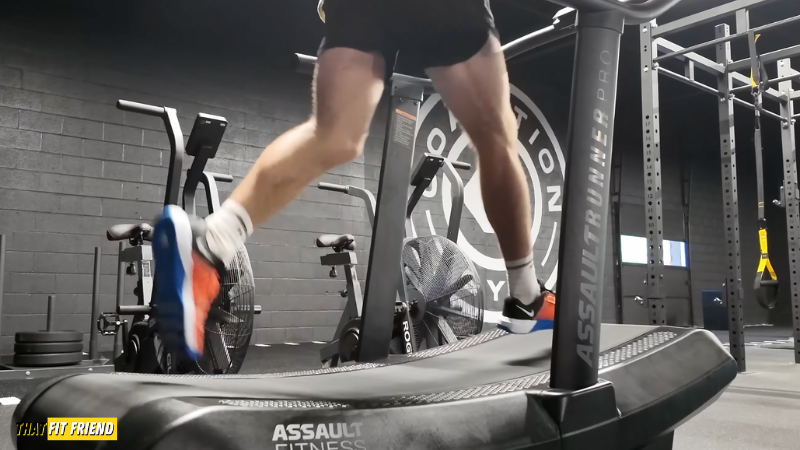
If you’re going to run in the Metcon 10 for short distances, I’d HIGHLY recommend trying to keep them to treadmills and the Assault Runner. If you’re running outdoors or you’re a heel striker, I think you’ll be super uncomfortable in these.
All that said, the Metcon 10, much like the 9, is not a great training shoe for workouts with running over 1,000 meters at one time due to its midsole density and the Hyperlift plate in its heel.
Hard Pass for Daily Wear: 5/10
If you want that single shoe that you can wear casually and to the gym, I’d look elsewhere. I purposely wore my Metcon 10s for multiple days while working at the store to test how they feel on the feet when you’re on your feet all day.
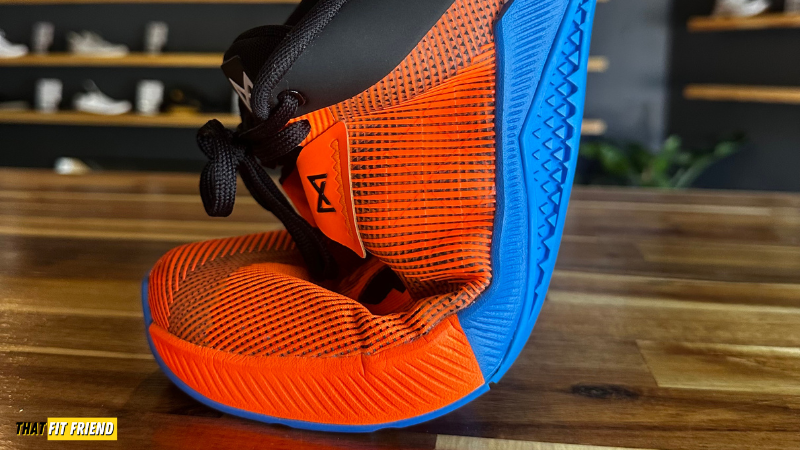
These are just too dense and too snug in the toe box and midfoot to make them comfortable for long walks and standing around all day. I found myself constantly taking my feet out of my shoes to give them room to breathe. Not to mention, the dense heel makes walking in these awkward, especially for longer distances over a few miles.
Construction Details
The upper in the forefoot and midfoot is built with a reinforced mesh. The medial side of the forefoot is covered with haptic overlays for additional durability. I like this for things like burpees where abrasion can wreak havoc on this part of the shoe. It’s worth noting that it does add some bulk to the upper and will prevent a ton of stretching when trying to break these in.

I’m indifferent on this shoe’s midfoot and lacing system. This model features 5 core eyelets with the middle third eyelet being a reinforced, larger eyelet. Internally, there are materials that give this eyelet a little more security and beef. This creates a fairly large gap between the lower and upper lace crossings which I find hit or miss from a comfort standpoint.
There’s a gusset on the padded mesh tongue and Nike got rid of the Lace-Lock feature and replaced it the tongue pocket. I didn’t have issues with the tongue sliding at all.


The midsole is built with Nike’s signature React foam which has cultivated quite the fan base for its overall comfort and responsiveness. Objectively speaking, the forefoot of the 10 feels better and more pliable than the foam used in the 9. This materials extends throughout the entirety of the shoe with the heel having the area where the Hyperlift plate is inserted.
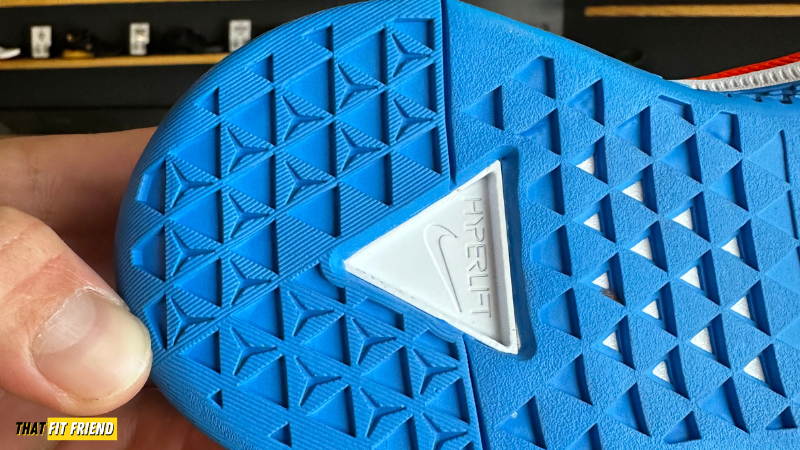
The outsole has been reworked and now features a triangle tread pattern. There are grooves in the forefoot for flexibility and small triangle cutouts in the midfoot to cut down on this shoe’s weight. The larger triangle that you see in the back is the Hyperlift plate that I’ve been talking about.


Final Remarks: Would I Buy Again?
Yes and no.
At the end of the day, the Nike Metcon 10 delivers on what it’s optimized to do, which is to be a stable training shoe for lifting that can work for CrossFit.
If you’ve missed the older Metcons, then you’ll like this shoe and I think you’ll enjoy their performance. It is objectively a better shoe compared to the 9 — or at least I think the vast majority of lifters and athletes will think this.
If you’re after a trainer that has more toe box room and versatility, look elsewhere. The 10 won’t be your best bet and it has once again fallen short for being as versatile as it could be for cross-training and short runs.
For me personally, if I was still enamored by the Metcon line — or Nike in general — then I’d buy this shoe again.
For where I’m at now in life and my training career, and in knowing how many small brands deliver really strong products for training, I’d consider other options for versatility and daily wear cross-functionality.
If you have additional questions about the Metcon 10, drop a comment below or reach out via Instagram!



Alec
I bought a pair recently and it feels a bit too snug on the sides and on the toes. I’ll be returning them but I wonder if I should go for a bigger size or just choose a different pair. Are these shoes supposed to feel this way? Do you have another recommendation? I’m looking at Nike, Adidas, Puma, Mizuno, New Balance and Reebok as these are easily found over here. I’ve been using the Asics Novablast 5 for my strength training/lifting for the past year and I’ve been looking for more specialized shoes.
They shouldn’t feel so snug that your feet are dying or to a point where you notice them a ton while wearing them and training. Sizing up ‘may’ help with it and could be worth it if you really like the look of them.
Other models to explore would be Adidas Dropset 3 and Reebok Nano X5!
Steph
Thanks for the in-depth review! I am shopping for a new pair of training shoes for my lifting sessions. I’m particularly interested in a pair good for squatting in, with general comfort being a bonus. I actually have been using an og pair of Metcon 4’s from 2018 as my go-to training shoes, so I was interested in the latest version of this model.
I have never had another pair of designated squatting sneakers (e.g. Adipowers) and I rarely run at the gym, so the low running rating doesn’t deter me. I tried on the Metcon 10s in store, and thought they felt good on feet. The additional cushioning around the heel and tongue definitely felt comfier than how my 4s feel.
Since Nike has a lenient return policy, I’ll probably purchase a pair to give a go.
Dope! You’ll have to let me know how they do for you. I’m a HUGE fan of the Metcon 4 and am building my own training shoe to rival that model, but fix some of its issues (fit and lack of versatility).
Keep me posted on how you like the Metcon 10!
JeffS
I can walk around with any of my “decent” shoes untied and never have to worry about my heel moving.
Yes, if you hear any discussion at all about how to tie the shoe to keep it in place, run the opposite direction. (in something other than a metcon obviously)
If you grab a Metcon 10, let me know if you rock them casually and what happens with the heel if you keep them looser.
Yep, great tip. Gotta remember, too, a lot of folks reading my reviews consider their trainers as options for potentially wearing for a bit of everything — I try to cover every angle where people are “actually” using their shoes. The Metcon 10 will not be one of the trainers that will excel there.
Yvette
Hi, thanks for sharing. I just purchased my shoes 3 days ago. I used them during CrossFit and I absolutely love the new toe front as the arch support. I do have a higher arch & it feels lighter + very comfortable for me. I always purchase my normal size 6 1/2 in Metcons & thinking I should’ve gone 1/2 smaller as they didn’t feel as snug as the 8s & 9s but overall I love love the shoe.
Love to hear that, glad you’re liking them! And thank you for sharing, I’m with you. I think these will be much more well received compared to the 8 & 9, especially in the CrossFit world!