

That Fit Friend is reader-supported and may earn commissions through affiliate links. We also work with select brands on paid editorial partnerships. These relationships do not influence our testing methodology, product ratings, or recommendations. Read more here!
It’s felt like more budget friendly barefoot shoes have been stepping up their game lately. WHITIN has had some solid entries into the market, and the AIRHAS Knit Barefoot Shoe was a surprisingly good shoe. And not just for the price point.
With AIRHAS’s performance barefoot shoe coming in at around $40, it doesn’t get more budget-friendly than that.
The performance of these have been solid overall for casual use and the various workouts I’ve tested them for. In the gym they’re a good entry option for more basic strength and hypertrophy work.
But it can start to fall a bit short pretty quickly when it’s asked to do anything more dynamic. For example, there are better options for the athlete-focused individual like the Tolos Archetype 3 and Inov8 Bare XF V2, but overall, color me impressed.

Who Should Buy This Shoe?
- Beginners to barefoot shoes. If you’re a beginner to barefoot shoes and are looking for a low-cost entry, this is a great shoe to start with.
- You need a cheap option for lifting: If you’re looking for a shoe primarily for lifting with some light cross-training mixed in, this one will get the job done adequately.
- Lower volume feet. If you have a lower-volume foot or a narrow-medium width foot, the aggressive TPU overlay on the forefoot won’t feel as aggressive.
AIRHAS Barefoot Shoe
$39.99

Pros
- Good beginner option
- Decent for lifting
- Removable insole varies feel
Cons
- Upper can run hot
- Tongue security lacks
- Toe break is hit or miss
Best For
- Lifting
- Casual Cross Training
- Barefoot Beginners
- Budget Shoppers
Specs
| Heel-to-Toe Drop | 0mm |
| Weight | 9.7 oz (size 10) |
| Width | Medium/Wide |
| Lifting Threshold | ~425 lbs |
| Run Distance Threshold | N/A |

Who Shouldn’t Buy This Shoe?
- You need a shoe that’s more dynamic. If you need a shoe for turf workouts, running, or CrossFit, this isn’t the shoe for you. Look into something like the Motus Strength 2 for the turf and CrossFit asks.
- High volume and instep feel. If you have a thicker or blockier foot, the TPU overlay will dig into your forefoot and cause a good amount of discomfort.
- You want as minimal a feel as possible. If you want a more minimalist shoe, this one will feel too chunky and overbuilt thanks to its budget-friendly materials. For this ask in the gym, the Vivobarefoot Primus Flow can be a great option.
Fit and Sizing
About My Feet: I have a normal arch/instep and my feet come in at an E/EE width. The length of my left and right foot are consistent with one another, and I size as a true US 10 for most companies’ sizing charts.
Fit Suggestions:
- Narrow (<D) feet: True to size.
- Medium (D) width: True to size.
- E: True to size.
- 2E+: Size up a half size.


The length and width on these shoes are honestly pretty on point. For most people with a narrow, medium, or E-width foot, going true to size is going to be the move. If you have a 2E foot width or wider, I suggest sizing up a half size. That should give you enough room in the forefoot to mitigate the discomfort caused by the heavy TPU overlay around the toe box.
If you have a thicker or blockier foot, it will help with keeping the slippery tongue in place, but it’ll cause that TPU overlay to dig into your foot more during flexion. It’s a bit of a tradeoff that you’re going to have to make the call on, which is more important?
These shoes do have a removable insole that gives you a bit more room if you rely on custom insoles or orthotics. There’s also not much of an arch in these, courtesy of the barefoot design, so if you have flatter feet, you’ll feel right at home.
It’s worth noting that Amazon makes returns and exchanges very easy. You shouldn’t have any issues buying a pair and exchanging them if you need to size up or down.
Performance
Lifting: 7.5/10
These can be a decent option for lifting. I do really like that I can take the insole out and get a bit closer to the ground, especially for deadlifts and sumo deadlifts. The flatter outsole has a nice platform and grounded feel to it for squats.
The rubber outsole does a good job when it comes to grip on most surfaces. Rubber gym floors, wooden platforms, machines, none of them are a problem. Where it falls short though is turf. The lug pattern just isn’t aggressive enough to get good traction on turf, especially in more dynamic moves.

The overall flexibility of this shoe is good, especially considering that it’s a more built out and stiff barefoot shoe. The only knock is the TPU overlay on the forefoot gets annoying when I go into any type of flexion making things like split squats and lunges frustrating.
The upper security and lateral support, thanks to the shoe being a bit more built out, is on point. The TPU is a bit thicker (likely due to it being made with more budget-friendly materials) which helps with things like Cossack squats and catching cleans, anything involving lateral force.
Cross-Training: 7/10
This is where the shoe starts to fall short. The heavy TPU overlay on the forefoot goes from annoying to uncomfortable quickly. And the low-profile lug pattern struggles to maintain purchase on turf. You run the risk of your feet sliding out from under you when you start doing anything athletic with quick jumps and cuts.
This is also where the tongue slippage becomes a real issue. The tongue isn’t gusseted and is a thin mesh. Despite an extra loop in the tongue, supposedly there for security, I spent half the time pulling the tongue back up and into place.


It’s a fine shoe if your primary form of training is strength and hypertrophy with a bit of light cross-training sprinkled in. But once you start doing a lot of jumps or more dynamic agility work, I’d suggest grabbing a different shoe like a Xero Shoes Prio that’s more tuned to that type of movement.
Short Runs: N/A
Look, I won’t lie to you, I didn’t do any running in these. The issues I had with the tongue, the discomfort of the TPU overlay on the forefoot, and the grip issues on turf all gave me enough pause. I got a good enough impression of the shoe that I didn’t want to subject myself to running in these.
Daily Wear: 7-7.5/10
It’s… okay. These do have a nice casual appearance with minimal branding which is always a plus. They just aren’t comfortable enough for me to wear all day. I know I’ve mentioned it a few times already, but the TPU on the forefoot was really that frustrating that it’s worth mentioning again. And if you are someone that already has issues with toe break in shoes, this one is only going to be worse.

All that said, it is a good entry to barefoot shoes and walking around. The removable insole is a bit thicker than your more premium models and the outsole provides more comfort than most. Even though that is due to being made with more budget-friendly materials, it’s enough to give this shoe a more transition-style feel to it instead of a true barefoot feel.
Construction Details
This model weighs 9.05 oz in a US men’s size 10. It does have a thin foam removable insole with a fully finished interior, so you can remove the insole without any issue. It is a barefoot shoe, which means it has a 0 mm heel-to-toe drop.

There is a heavy double-TPU overlay that wraps around the toe box and runs up the forefoot to the break point. A single TPU overlay extends down the midfoot. The TPU is more rigid and dense, but it does break-in over time. Under the TPU, the upper is a mesh that runs from the forefoot through to the boot.
The boot is a padded mesh boot, more built out and structured than most barefoot shoes. It also isn’t crazy rigid despite its appearance. The boot and tongue both have external pull-tabs to help with sliding the shoe on.
The tongue is a thin mesh and is not gusseted. Unless you have a thicker or blockier foot that really fills out the upper, the tongue will slide down to the side. You can minimize the slide by cranking the laces super tight, but with the thin mesh of the tongue, you’ll feel the laces digging into your midfoot. There are 5 core eyelets up the midfoot and the tongue has an additional loop for security. Not that it does any good.

The outsole is a full rubber outsole with a low-profile triangular lug pattern. The outsole extends up the medial and lateral sides of the midfoot for a bit of added lateral security and support.
Alternative Options
It’s hard to argue with a sub-$40 pair of barefoot shoes. That said, there are some, in my opinion, better alternatives out there in the sub-$50 price range.
- WHITIN Barefoot: This is a softer shoe and is less aggressive in the toe box.
- AIRHAS Knit: This option has a more comfortable upper and a booty style construction.
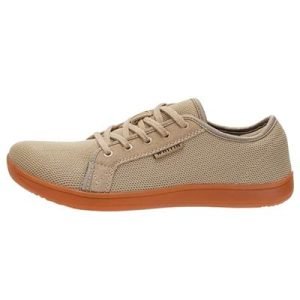
WHITIN Barefoot Sneaker
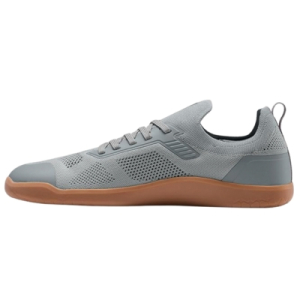
AIRHAS Knit Barefoot Shoe
If you are comfortable spending a bit more, in the $90-$120 range, Xero and Tolos have great options in the true barefoot and transition category.
Final Thoughts: Would I Buy Again?
These haven’t necessarily been my favorite budget barefoot shoe, and I probably won’t be buying them again, but they can get the job done.
This specific model has a few too many design conflicts for how I personally like to use my barefoot shoes.
They are, however, a great option for beginners that are barefoot-curious. Especially if you’re looking for something more geared towards casual wear and light lifting.


Add a Comment