

That Fit Friend is reader-supported and may earn commissions through affiliate links. We also work with select brands on paid editorial partnerships. These relationships do not influence our testing methodology, product ratings, or recommendations. Read more here!
The NOBULL Outwork Flex versus the NOBULL Outwork is a matchup between a shoe built to bring new-age maneuverability to NOBULL’s lineup and the classic, unchanged trainer that put the brand on the map. Over the last decade, NOBULL has been notorious for rarely updating their training shoes.
With the Outwork Flex, they’ve built a model that lives between their strength-biased Outwork and more cushioned Impact, delivering a more pliable EVA midsole that brings some much-needed forefoot give to their lineup.
The classic Outwork (formerly known simply as the NOBULL Trainer) has remained virtually untouched since its inception. It is a tried-and-true, blocky trainer built with a high-density midsole and a bombproof SuperFabric upper that lifters and CrossFitters either deeply love or feel has aged out.
Weight and underfoot feel differ noticeably between these two models. The NOBULL Outwork Flex enters weighing in at 11.6 ounces for a men’s size 10 with a 4mm drop. The original NOBULL Outwork comes in at 10.7 ounces with the same 4mm heel-to-toe offset.


Performance Quick Hits
I’m going to do my best to separate personal preferences from this section, especially since both shoes handle flexibility, midsole density, and arch support in ways that will cater to very different training styles and fit preferences.
- Better for Lifting: NOBULL Outwork. The original Outwork features a high-density hard foam midsole that has very little compression under heavy loads. If you’re looking for peak stability during heavy squats, deadlifts above 500 lbs, or powerlifting-style sessions, the classic Outwork delivers a rock-solid, grounded base. The Outwork Flex uses a medium-density EVA foam that offers plenty of support for barbell work up to around 455 lbs, but its midsole has a touch more give.
- Better for CrossFit and Cross-Training: NOBULL Outwork Flex. The classic Outwork can feel rigid and clunky during higher-rep jump training and plyometrics because its hard midsole lacks forgiveness. The Outwork Flex brings a relative degree of forefoot flexibility and a grippy herringbone tread that feels significantly more maneuverable during box jumps, kettlebell circuits, and rapid multi-directional WODs.


- Better for Short Runs: NOBULL Outwork Flex. Neither of these shoes are great hybrid shoe options, but for workouts that call for short interval runs under 800 meters, they can both get the job done. The Outwork Flex offers slightly more forefoot give during ground contact, but it still feels relatively clunky and high-volume when trying to open up your stride or hit fast sprint intervals.
- Better for Daily Wear: NOBULL Outwork Flex. For pure daily wear, walking, and running errands, the Outwork Flex takes a light win due to its SuperFabric upper, which is exceptionally easy to wipe clean after rainy or muddy commutes. The Outwork Flex looks solid and has a bit more underfoot cushion.
The Performance Takeaway
If you stop reading this article here, here are your core takeaways.
Grab the NOBULL Outwork Flex if you’re a fan of classic haptic NOBULL durability but have always wanted a model that moves a little more anatomically, features notable medial midfoot support, and provides a slightly more forgiving ride for cross-training.
Stick with the original NOBULL Outwork if you want maximum raw stability for heavy barbell training, prefer a flatter midfoot with zero artificial arch support. In my opinion, the Outwork Flex will be the better move for a MAJORITY of athletes and lifters because it’s more versatile while delivering a solid amount of stability.

NOBULL Outwork

NOBULL Outwork Flex
Sizing and Fit Comparison
About My Feet: I have a normal arch/instep and my feet come in at an E/EE width. The length of my left and right foot are consistent with one another, and I size as a true US 10 for most companies’ sizing charts.
Narrow, Medium, and E/EE Foot Suggestions:
- Outwork Flex: True to size.
- Outwork: True to size.

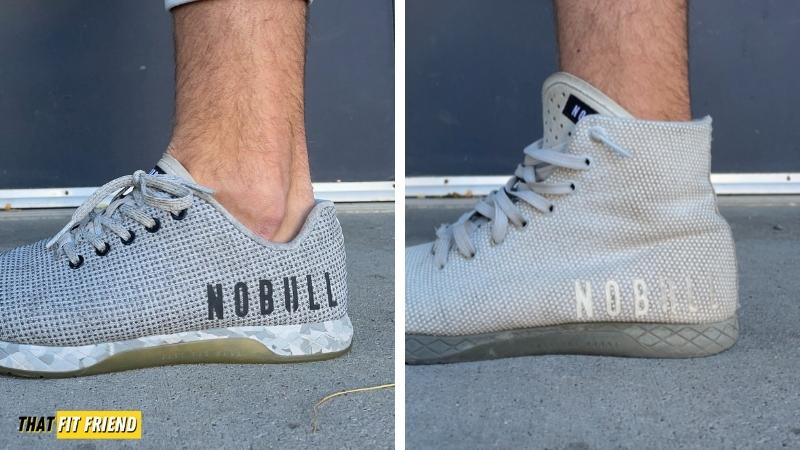

3E+ Foot Suggestions:
- Outwork Flex: Pass on these or size up a half-size to accommodate the midfoot taper.
- Outwork: Size up a half-size to get additional forefoot volume.
Construction Details
The construction of the classic NOBULL Outwork and the Outwork Flex highlights how NOBULL approached tweaking a classic silhouette. While the original Outwork relies on heavy-duty SuperFabric and a flat, ultra-dense chassis, the Flex introduces a modified midfoot geometry and a slightly more pliable foam package.
Upper Differences
The classic NOBULL Outwork features NOBULL’s iconic SuperFabric upper—a flexible, lightweight material covered in thousands of tiny guard plates. This construction is practically bombproof against abrasion from rope climbs, burpees, and barbell scrapes, and it remains extremely easy to wipe down and clean.


In contrast, the NOBULL Outwork Flex utilizes a high-durability mesh base covered in seamless haptic overlays. NOBULL altered the overlay pattern slightly on this model, which gives the shoe a bit more visual zest compared to their traditional flat look. While this upper is still a tank against gym wear, it inherits NOBULL’s classic drawback: a noticeable lack of breathability that can make the shoe run hot during intense indoor sessions.
[tff-revew-widget id=”26785″]
Midsole Differences
The original Outwork utilizes a high-density hard foam midsole that is consistent from heel to toe. It gives the shoe an ultra-grounded, rigid feel underfoot that excels during static lifts, but offers zero energy return or impact absorption.


The Outwork Flex shifts to a medium-density EVA foam chassis. It is specifically tuned to sit in the middle of NOBULL’s lineup—more forgiving than the rock-solid original Outwork, but more stable than the plush Impact. When you press into it, the midsole has a slight degree of give, but it firmly airs on the side of stability. This structural density makes the Flex exceptionally dependable for heavy barbell work up to 455 lbs, though it creates a relatively thick stack height that can feel slightly clunky on short runs.
NOBULL Outwork
$150

Pros
- Easy to clean
- Good stability
- Durable upper
Cons
- Not great for running
- Lack breathability
- Not very wide
Best For
- CrossFit-Style Training
- Lifting
- Daily Wear
- Casual Classes and HIIT
Specs
| Heel-to-Toe Drop | 4mm |
| Weight | 10.7 oz (size 10) |
| Width | Medium |
| Lifting Threshold | ~515 lbs |
| Run Distance Threshold | <1 mile |
Outsole Differences
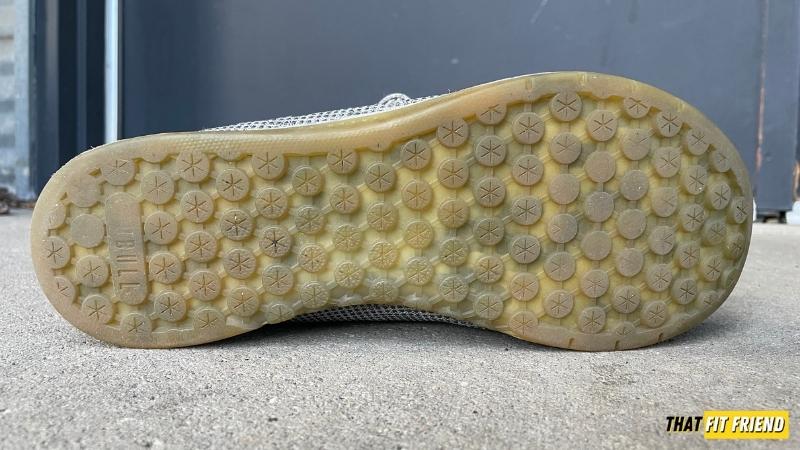
The original Outwork features a full-rubber lug pattern outsole with medial and lateral wrap-arounds for rope climbs. The base is flat and wide throughout the midfoot, prioritizing a uniform contact patch with the floor.
The Outwork Flex opts for a uniform rubber outsole molded into an aggressive herringbone tread pattern. The lugs bite exceptionally well on gym turf and rubber floors alike. Rather than utilizing a straight, blocky edge through the midfoot, the Flex’s outsole is modified into a slight “bean” shape that tapers tightly through the arch, creating a more form-fitting feel with noticeable medial support.

Final Remarks: Which Is Best for You?
The NOBULL Outwork and NOBULL Outwork Flex are both highly capable strength-focused trainers, but they cater to very different preferences underfoot. If you want a shoe with a clean look, a durable haptic upper, and a chassis that feels significantly more maneuverable during jump training, kettlebell circuits, and dynamic WODs, grab the Outwork Flex. Just keep in mind that its midfoot taper and artificial arch support won’t be ideal for everyone.
On the flip side, if you are a hardcore powerlifter or traditional cross-fitter who wants an indestructible SuperFabric upper, a flat platform with zero arch interference, and rock-solid stability for heavy squats and deadlifts, stick with the classic NOBULL Outwork.
Ultimately, look at your foot shape and how much you value arch support. If you have flatter or wider feet and prefer a completely flat, non-intrusive base, the classic Outwork (or barefoot-inspired options like the Catalyst) will be the better bet. But if you want a classic NOBULL feel that moves a little more naturally with the foot, the Outwork Flex represents a great step forward in versatility.


Add a Comment