

That Fit Friend is reader-supported and may earn commissions through affiliate links. We also work with select brands on paid editorial partnerships. These relationships do not influence our testing methodology, product ratings, or recommendations. Read more here!
When lifters and athletes ask for a budget-friendly gym shoe in the $60 to $80 range, the Nike MC Trainer line has traditionally been an easy recommendation. The MC Trainer 3 was a solid, consistent workhorse that made steady improvements over the first two iterations, offering reliable grip, decent stability, and versatile gym performance.
With the release of the Nike MC Trainer 4, Nike set out to update their entry-level trainer with a softer, more “athletic” midsole and a revamped upper.
To see how these updates translate to the gym floor, I put the MC Trainer 4 through a variety of lifting and cross-training focused tests. In my testing, I also wanted to see how this shoe compared to other big-brand budget options like the Reebok Nano Gym 2 and the more premium, versatile-focused Nike Free Metcon 7.

Who Should Buy the Nike MC Trainer 4?
- Budget Shoppers: If you only have $65 to $80 to spend and need a lightweight, cushioned shoe for light gym workouts and machine circuits.
- Narrow, Low-Profile Feet: If you naturally have very narrow feet, low insteps, and minimal heel depth that won’t fight the padded heel cup. Another good option here can be the Nike Flex Control 4.
- Lifters Who Wanted a Softer MC Trainer 3: If you enjoyed the previous model but found the heel platform too stiff and rigid for jumping and cardio, then you’ll like the updated midsole in the 4.
Nike MC Trainer 4
$85

Pros
- Good for Narrow Feet
- Budget Price
- Bouncy Midsole
Cons
- Midfoot Lacks Security
- Not Great for Toe Splay
- Heel Slip Can Be An Issue
Best For
- Budget Shoppers
- Casual Cross Training
- Light to Moderate Lifting
Specs
| Heel-to-Toe Drop | 4mm |
| Weight | 11.4 oz (size 10) |
| Width | Narrow |
| Lifting Threshold | ~315 lbs |
| Run Distance Threshold | 1-2 mi (tested at one time) |
ALTERNATIVES
Who Shouldn’t Buy the Nike MC Trainer 4?
- Athletes Who Need Reliable Lockdown: If you do dynamic plyometrics, burpees, and agility drills where heel slip and loose lacing compromise your performance, you’ll probably want to pass on these. Grab something like the Adidas Dropset 4 for this.
- Medium-to-Wide Footed Lifters: The combination of a drastically shortened length and aggressive forefoot taper will feel suffocating for wider foot profiles, in my opinion. For wide feet, look into options like the Forged & Tested Catalyst and Inov8 F-Lite.
- Heavy Barbell Lifters: The narrow base and lack of toe splay will hinder stability during heavy squats, cleans, and deadlifts. If you’re considering Nike shoes specifically for lifting, grab the Nike Metcon 10 or find the older Nike Metcon 9 on sale.


Performance Quick Hits
- Best For: Casual gym-goers and beginner-to-intermediate lifters on a tight budget who have low-volume feet and stick to light-to-moderate dumbbell circuits.
- Sizing Warning: Runs exceptionally short and narrow. Sizing up at least a half-size is virtually mandatory.
- Underfoot Feel: Softer, more forgiving foam midsole than the MC Trainer 3, paired with improved forefoot flex grooves and a less clunky heel platform.
The Performance Takeaway
If you stop reading this review here, here are your core takeaways.
The Nike MC Trainer 4 is a mixed bag and a noticeable step backward from the MC Trainer 3. While Nike successfully improved the underfoot feel by making the midsole foam softer, bouncier, and less rigid in the heel, they created some pretty big fit and lockdown issues with the upper redesign.
The shoe runs short, cramming toes right against the front toe guard while simultaneously having a bit of heel slip due to, what from I can tell, an ineffective fabric-loop lacing system that struggles to lock down.
If you have narrow, low-profile feet and size up a half to full size, this can serve as an affordable, lightweight shoe for general gym circuits. However, if you have standard or wide feet, need secure heel containment for dynamic movements, or loved the locked-in feel of the MC Trainer 3, this model is going to be a tough sell.
Nike MC Trainer 4
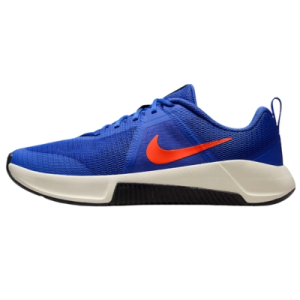
Nike MC Trainer 3
Sizing and Fit Suggestions
About My Feet: I have a normal arch/instep and my feet come in at an E/EE width. The length of my left and right foot are consistent with one another, and I size as a true US 10 for most companies’ sizing charts.
Sizing in the Nike MC Trainer 4 is the most critical factor to consider before purchasing. Simply put, this shoe runs exceptionally small and short.
I tested my true US Size 10—the same size I wear across all Nike, Reebok, and Adidas trainers—and my toes were jammed completely into the front of the shoe. It almost feels like a full size too short in standard length.


- Narrow to Medium (D-Width) Feet: Size up a half-size at minimum. Going true to size will leave your toes completely smashed against the toe bumper.
- Wide Feet (2E/EE Width): You will likely need to size up a full size, though the narrow platform and tapered forefoot may still feel too restrictive across the lateral edges of the foot.
Keep in mind that sizing up to accommodate length could potentially exacerbate the heel slippage caused by the lacing system and heel cup design. Be sure to try these on indoors and perform a few burpees or lunges before keeping them.
Performance Expanded
Lifting & Strength Work: 7/10
Under moderate loading—such as 70 lb dumbbell snatches, 225 lb deadlifts, and 135 lb overhead presses—the base of the shoe feels relatively planted. Nike toned down the overly rigid, blocky heel counter found on the MC Trainer 3, so you no longer feel like you’re stomping around with a clunky, horse-shoe-like platform underfoot.

However, the shoe’s lifting potential is heavily undercut by the fit. Because the toe box is so short and narrow, your toes are jammed hard against the front bumper, preventing natural toe splay and stable tripod grounding during lifts. While the platform itself handles recreational loads fine, lifters wanting to push heavier barbell weights will be held back by the lack of foot splay and midfoot containment.
Cross-Training: 6/10
On the fan bike, dumbbell circuits, and toes-to-bar, the shoe’s lighter weight and softer midsole shine. The midsole has noticeable bounce and play compared to older, stiffer budget models, and the flex grooves allow your foot to articulate naturally during lunges and floor work.

The primary issue during dynamic conditioning is security. Because the external loop lacing system fails to retain tension, and the thick heel padding pushes the foot forward without locking the calcaneus into place, there is persistent heel slippage during dynamic transitions. If you’re doing box jumps, burpees, or lateral bounding, that slight heel lift quickly becomes frustrating and distracting.
Short Runs and Daily Wear: 5.9/10
These can be okay if you’re someone who tacks on a mile or two pre or post workout or likes to do some treadmill walking, assuming you get the sizing correct. The midsole’s feel isn’t the issue, it’s the toe box jamming.
For daily wear, I truthfully didn’t test this model a ton. I can stomach a lot of discomfort for shoe reviews, but this shoe next level uncomfortable. Maybe if I sized up a little bit it would have been better. However, I’m just chalking it up to the fact that this model is a complete miss for my wider feet and foot anatomy.
Construction Details
Upper
The upper features a lightweight mesh that provides decent airflow during intense sweat sessions. However, the lacing system is the biggest weak point of the build. Nike transitioned to an external fabric-loop lacing layout that runs through the midfoot rather than traditional punched eyelets.

When you pull the laces tight, the fabric loops provide too much friction and give, causing the laces to relax and lose tension before you can tie them down. Furthermore, the long-term durability of these external loops is questionable if you frequently have to yank on them to secure your foot.
Midsole
The midsole features a full-length foam compound that Nike tuned noticeably softer than the MC Trainer 3. It absorbs impact much better during plyometrics, jumping, and cardio intervals, avoiding the harsh, rigid feel of earlier models while keeping enough density for light-to-moderate dumbbell training.

Outsole
The outsole is constructed with a full-coverage rubber tread featuring strategically placed flex grooves throughout the forefoot and midfoot. It offers dependable traction on gym turf, rubber mats, and cardio machine pedals, providing good flexibility without feeling clunky.

Final Remarks: Is the Nike MC Trainer 4 Worth It?
The Nike MC Trainer 4 is unfortunately a bit of a letdown, especially following the positive trajectory of the MC Trainer 2 and 3. While the softer, more responsive midsole and improved outsole flexibility are welcome upgrades underfoot, they are overshadowed by fundamental issues with fit and security.
Between the drastically short length, the narrow toe box, the ineffective fabric-loop lacing, and the heel slip caused by lower collar padding, it is very difficult to recommend this model over its predecessor.
If you decide to pick up a pair, make sure to size up at least a half-size and test them indoors on a few reverse lunges and burpees first to ensure the heel lockdown agrees with your foot shape.
If you have additional questions on the Nike MC Trainer 4, sizing, or alternative budget trainers, leave a comment below!



Add a Comment