

That Fit Friend is reader-supported and may earn commissions through affiliate links. We also work with select brands on paid editorial partnerships. These relationships do not influence our testing methodology, product ratings, or recommendations. Read more here!
The CXT‑3 Trainer is TYR’s latest update to its CrossFit-focused training shoe line. Me, along with the community, have had quite a few questions about this model because the CXT-series has notoriously had a bit of a mixed reception over the last few releases.
The original CXT-1 had a fairly loyal following, then we had the CXT-2 drop, which introduced some changes that didn’t land for everyone. However, the CXT 2 tended to be a little less polarizing regarding its fit, construction, and performance, so it ended up being used more by the masses.
After putting this shoe through multiple sessions, I think the CXT-3 does a few things really well — especially for lifters who like a higher heel-to-toe drop and a dense, stable platform. It’s also a shoe that will feel very dialed and specifically made for you, depending on your foot anatomy and how your workouts are programmed.
If your training revolves around CrossFit with a bias towards lifting and strength work, the CXT-3 can make a lot of sense. If your workouts skew more athletic or cardio-heavy, there are likely better options on the market depending on what you’re after. I’ll explain.
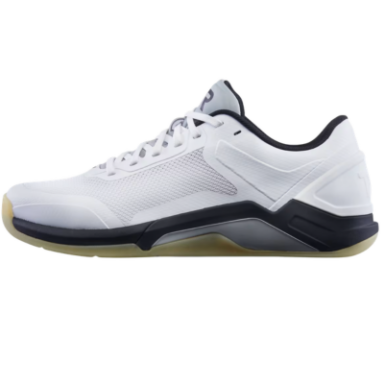
TYR CXT-3 Trainer
$160
Pros
- Stable for Heavy Lifting
- Great for CrossFit
- Grippy Outsole
Cons
- Toe Box Can Feel Narrow
- Not the Best Running WODs
Best For
- Heavy Strength Sessions
- CrossFit
- Athletic Workouts (strength bias)
- Arch Support Lovers
Specs
| Heel-to-Toe Drop | 9mm |
| Weight | 13 oz (size 10) |
| Width | Narrow/Medium |
| Lifting Threshold | ~500 lbs |
| Run Distance Threshold | 1,000m (at one time) |
Who Should Buy the TYR CXT-3?
I think the CXT-3 is going to resonate most with a pretty specific group of athletes and lifters. In my lowly opinion, this isn’t one of those trainers that’s going to feel universally good for everyone, but for the right person, it’s going to work really well.
- Athletes who LOVED the CXT-1: If you were a big fan of the first model and felt like the second version missed the mark, the CXT-3 feels like TYR trying to bring some of that original identity back, but with durability and versatility improvements.
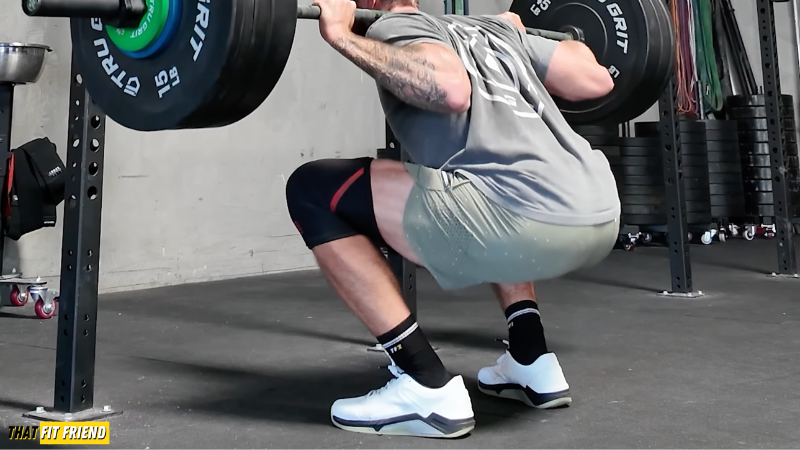
- Lifters who like a higher heel-to-toe drop: From my athlete and coaching perspective, the 9mm drop is one of the defining characteristics of this shoe and one of the biggest reasons someone might buy it. If you like having a bit more heel for movements like squats, thrusters, and Olympic lifts but you don’t necessarily want to switch into dedicated weightlifting shoes, the CXT-3 can fill that gap really well.
- To elaborate here, if you find that you like a little help with forward knee translation during squats or wall balls, the added heel height can make those movements feel more comfortable, then the CXT-3 makes sense for you.
- Strength-focused CrossFit athletes or gym-goers: If your programming skews heavily toward lifting, strength work, and machine training, the CXT-3 will likely feel right at home. The midsole runs fairly dense, the outsole has good grip, and the shoe feels very planted under heavier loads.
- A comment from my CXT-3 video reivew: “All-in-all, everything you said is true, but if you want a super-stable shoe with excellent ground feel for more lifting-focused workouts, these are pretty great. This, coming from a guy who generally prefers shoes like the Free Metcon, PR8, or Nobull Drive.”
- Athletes who like a bit more arch support: Some training shoes feel very neutral through the midfoot, but the CXT-3 definitely leans more supportive with its medial sidewall construction. If you enjoy that extra structure under the arch and prefer a shoe that feels supportive rather than super flexible, this will feel like a perk.


Who Shouldn’t Buy the TYR CXT-3?
On the flip side, there are also a few types of athletes where I’d strongly consider looking at other options.
- Wide-footed athletes or lifters with flatter feet: The CXT-3 runs on the narrower side, and the toe box has a fairly aggressive taper. On top of that, the medial sidewall creates a pretty noticeable arch structure.
- Athletes whose workouts involve a lot of running or conditioning. While you can run in the CXT-3 for short intervals, it’s not really built to be a hybrid trainer. The midsole runs fairly dense, and once you start pushing longer intervals — especially anything around or over 1,000 meters — the shoe starts to feel a little too firm for that type of work.
- Athletes with shallower ankles: Another group that may struggle with the CXT-3 are athletes who frequently experience rubbing around their ankle bones. The updated heel collar sits slightly higher, and in my testing it did create some friction around the lateral malleolus.
- Athletes who prefer lower-drop trainers: If you’re someone who prefers a flatter training shoe — something in the 0mm to 6mm drop range — the CXT-3 probably won’t feel natural.

Fit and Sizing
About My Feet: I have a normal arch/instep and my feet come in at an E/EE width. The length of my left and right foot are consistent with one another, and I size as a true US 10 for most companies’ sizing charts.
Earlier CXT trainers tended to run slightly short, but the CXT-3 feels closer to true-to-size and maybe even slightly longer. I went true to size in my normal size 10. My foot width sits around E to EE. The length felt fine for me, but the shoe still runs a bit narrow overall.
My sizing suggestions:
- Narrow (<D) feet: Half size down could work
- Medium (D) width feet: True to size
- Wide (E/EE) feet: True to size, but expect a snug fit
- Extra Wide (3E+): These may be a pass


Because of the toe box taper, sizing down could make the shoe feel too tight for wider feet. For flatter feet, expect a bit more arch in this model, so buyer be warned in the event you need to return.
Performance Assessment
Lifting: 9/10
Lifting is where the CXT-3 performs best. The combination of the 9mm drop, dense foam midsole, and supportive upper makes this a solid option for strength-focused workouts. I’ve squatted over 300 lbs and deadlifted north of 455 lbs in this shoe with no stability issues whatsoever.
As pointed out above, for lifters who like a bit of heel elevation but don’t want to switch into dedicated weightlifting shoes, the CXT-3 can fill that gap well. During my testing, I had no issues with stability while performing squats, cleans, and deadlifts. The reworked outsole with strategic grooves in the forefoot is also a welcomed change for lifting.

Cross-Training and CrossFit: 8.3/10
For CrossFit and cross-training, the CXT-3 is more of a middle-of-the-road option. It can absolutely work for a variety of WODs, but your experience in them will depend heavily on what your workouts look like and what you prefer.
Because the shoe runs dense and supportive, it works better for workouts that emphasize strength rather than highly athletic movements. They have decent ground feel and the durability ticked most of the boxes you want when it comes to this training context.


For more athletic-focused sessions, this shoe has solid lateral support, so I don’t think you’ll have issues with spillover if your feet work in this model. That said, athletes who like flexible shoes, highly responsive midsoles, and more “pop” during jumps may find the CXT-3 a little too rigid.
Short Runs: 7.2/10
Running isn’t a strong point for this shoe. The CXT-3 feels similar to the CXT-2 in that the midsole runs fairly dense, which limits comfort during longer runs.
For me, about 800-1,000 meters on a curved treadmill was the most I wanted to do in this shoe. Short intervals or sprints are manageable, but once you get into longer distances — especially over 1,000 meters — the density of the midsole starts to feel noticeable.

Daily Wear: 7/10
The CXT-3 is definitely a gym-focused training shoe. It’s not going to be that trainer that can be the “all-in-one” for travel or all-day wear. Between the snugger toe box and arch support, it’s not something I’d want to wear all day, at least.
If you’re looking for a single shoe that you can use for workouts, travel, and casual wear, this probably isn’t the best option. For those asks, I’m going with the Haze Trainer or While On Earth Move Trainer. For me, this is more of a shoe that lives in the gym bag and only comes out for training sessions.
TYR CXT-3 Trainer Alternatives
If the CXT-3 sounds close to what you want but you’re worried about the fit and density, here are a few training shoes I’d consider instead. Each of these options solves a slightly different pain point depending on your foot anatomy and training style.
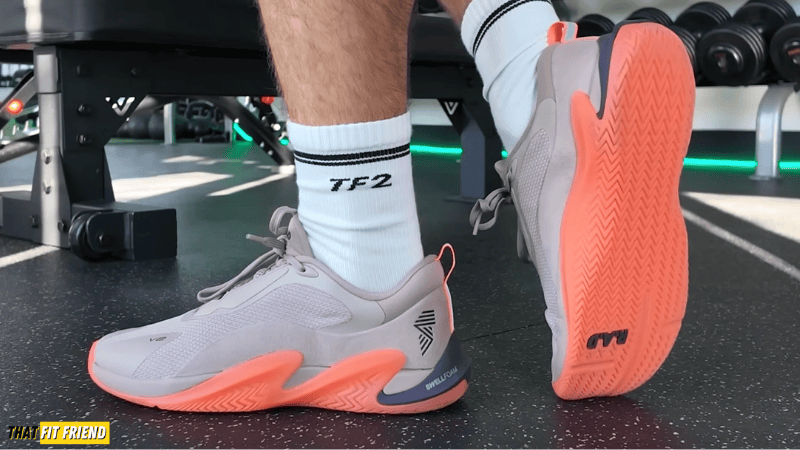
RAD ONE V2: Better All-Around Versatility
If you want a stable CrossFit shoe but something that feels a little more versatile than the CXT-3, the RAD ONE V2 is a great option. It’s still stable enough for heavy lifting but has a more forgiving ride for jumps, transitions, and athletic workouts.
This is the better pick if your training is a mix of lifting, conditioning, and general CrossFit workouts.
Born Primitive Savage 1: Better for Wide Feet
If the CXT-3’s narrow fit sounds like a problem, the Savage 1 is one of my favorite alternatives. It has a more anatomical toe box and generally feels less restrictive through the forefoot.
This model works especially well for athletes with E+ width feet who still want a stable CrossFit-focused training shoe. You could also explore the Flux Adapt Graphene Trainer for a wide, zero-drop construction.
Inov8 F-Fly: Better for WODs With Running
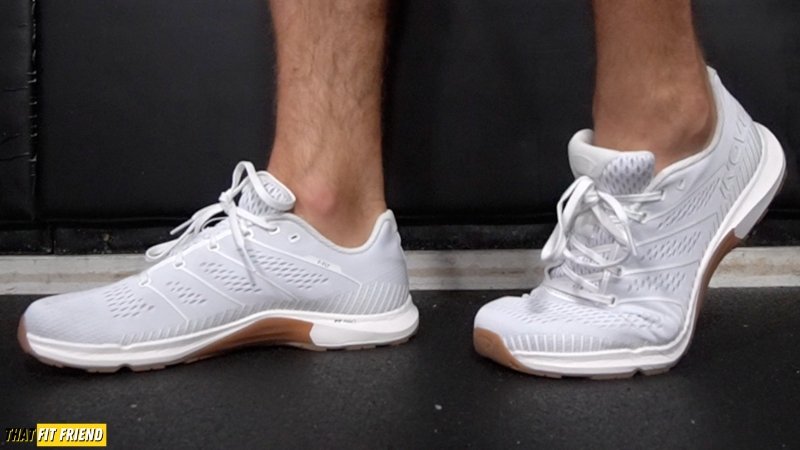
If your workouts regularly include runs or longer conditioning pieces, the CXT-3 will likely feel too dense. The F-Fly is a much better hybrid option because it feels lighter and more forgiving for short runs while still working for moderate lifting.
Construction Details
The forefoot features an extended outsole wrap, which helps add durability around the toe. The upper is built with a chain-link mesh construction through the forefoot and midfoot. There are TPU overlays wrap around the toe box, extend along the midfoot, and continue around the heel for additional structure.
Around the heel, another TPU layer provides added stability and helps reinforce the rear of the shoe. The lacing system uses six core eyelets plus a seventh lace-lock eyelet, and the padded mesh tongue is gusseted to help improve lockdown.


The midsole uses Surge NRG foam, which runs throughout the length of the shoe and contributes to the shoe’s dense and stable feel. Finally, the outsole uses TYR’s TyrTac rubber compound. The forefoot includes updated grooves that improve flexibility slightly compared to the previous version.
Final Thoughts: Would I Get Again?
Overall, the CXT-3 is a solid training shoe for the right athlete.
It improves on a few aspects of the CXT-2, and I think it will resonate particularly well with lifters who loved the original CXT-1.
That said, it’s not the most versatile trainer on the market. The narrow fit, aggressive arch, and dense midsole make it a shoe that will work great for some athletes and feel uncomfortable for others.
If your training revolves around lifting and strength work, the CXT-3 is worth considering.
If your workouts lean more toward running, athletic conditioning, or highly dynamic movements, there are likely better options out there.



Add a Comment