

That Fit Friend is reader-supported and may earn commissions through affiliate links. We also work with select brands on paid editorial partnerships. These relationships do not influence our testing methodology, product ratings, or recommendations. Read more here!
ver the years I’ve tested and reviewed hundreds of shoes, and I realized that I haven’t done nearly enough to help my narrow-footed friends. I’ve spent countless hours talking about different shoes for a number of different athletes, and devoted the bulk of that time talking about wider shoes.
I wanted to put this guide together specifically for those with narrower feet. If you’ve got narrower feet, specifically if you have a D-width foot or narrower, you already know the struggle.
Most training shoes end up feeling like clown shoes or snow shoes. You over crank the laces trying to get something resembling lockdown only to have the upper fold in and look atrocious. And your feet still slide around!
If that’s you, I got you. This guide features six of my favorite training shoes for narrow feet, across different price points, functionalities, and performance needs. From minimalist models to cardio-ready hybrids and more lifting-focused models, I’ve got something here for every narrow-footed athlete.
Don’t Feel Like Reading?
- Best All-Around Gym Performance: PUMA Fuse 4
- Best for Beginners: Reebok Nano Gym
- Best for Minimal Feel: New Balance Minimus TR V2
- Best Budget Pick: Nike MC Trainer 3
- Best for HIIT/Cardio Classes: Adidas Rapidmove ADV 2
- Best for CrossFit/Heavy Lifting: TYR CXT-2
Author’s Note: All of the shoes featured in this article should work well for feet widths that are for E-widths and comfortably below. I tried to include shoes for a variety of training contexts, so there’s a bit of everything here for everyone to explore and start their search.
Best for Generalists: PUMA Fuse 4
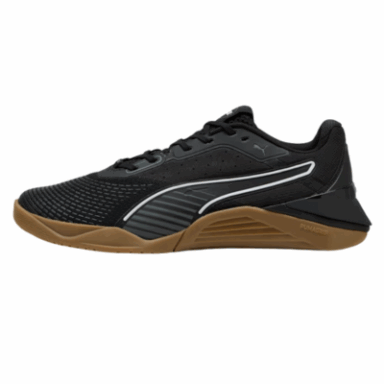
The PUMA Fuse 4 is PUMA’s latest premium gym shoe, built for lifting, cross-training, and light cardio. If you train multiple times a week and like to mix up your sessions with traditional strength training, machine work, some light cross-training and cardio, and classes, this shoe delivers a strong all-around package.
PUMA Fuse 4
$120
Pros
- Great for narrow feet
- Awesome outsole grip
- Good upper security
Cons
- Fairly heavy
- Heel can be clunky
- Lacks breathability
Best For
- CrossFit
- Recreational Lifting
- Narrow Feet
- Cross-Training
Specs
| Heel-to-Toe Drop | 4mm (estimated) |
| Weight | 14.75 oz (size 10) |
| Width | Narrow |
| Lifting Threshold | ~455 lbs |
| Run Distance Threshold | <1 mile (at a time) |
Sizing Need to Know
- Removable Insole: Kind of (drop-in midsole)
- Width: Narrow/Medium
- Narrower Feet Sizing: True to Size
- Flatter Feet Sizing: These have some arch to them.
- Relative Sizing: Go the same size as Puma, Nike, and Reebok.
For More Context
- For More Info: Read My Review
- Good Alternative: TYR CXT-2
- PUMA’s Return Policy: Learn more here
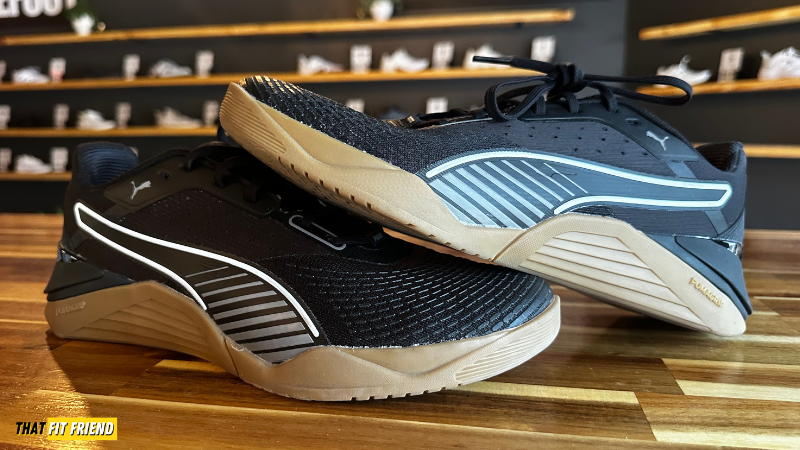
The Fuse 4 has a solid platform for lifting with the flared heel for additional stability under a heavy barbell load. The forefoot has some width but doesn’t feel sloppy, making it a great fit for narrower feet who want stability without a ton of toe splay.
Underneath, the outsole provides incredible maneuverability and gripability on pretty much every surface you’ll come across. And the Puma Flex construction on the forefoot breaks in super quick, really adding to the shoe’s flexibility. If you prefer a more snug, sock-like fit the Fuse 4’s low volume upper is going to make you feel right at home. It hugs your foot without putting too much pressure on the midfoot or forefoot.

Not without its drawbacks though, the lack of both a traditional midsole and insole can be a bit annoying. Instead, the Fuse 4 has a combined drop-in midsole/insole. Not a dealbreaker, just something to be aware of. And that flared heel I mentioned earlier that provides great additional stability? It can become clunky and overwhelming quickly when you start incorporating running or quick agility drills.
Bottom Line: For most narrow-footed athletes, the Fuse 4 will fit true to size. It brings a solid performance for those wanting a grippy and stable ride. Lifting, cross-training, and CrossFit are all going to be a great fit for this one. Just maybe don’t rely on it too much if your training is heavy on the cardio.
Best All-Arounder for Beginners: Reebok Nano Gym
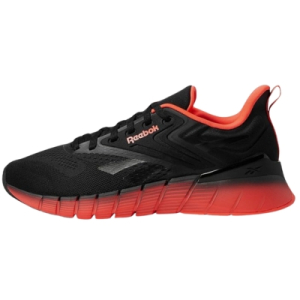
The Nano Gym might be one of the most slept-on shoes in Reebok’s Nano line. It blends stability, comfort, and breathability better than most. If you like to vary your training across lifting, classes, running, and cross training, this is the shoe for you.
Reebok Nano Gym
$75
Pros
- Bouncy midsole
- Good upper security
- Great price point
Cons
- High drop is hit or miss
- Relatively heavy
- Not for wide feet
Best For
- Lighter Lifting
- HIIT
- Classes
- Beginners
- Short Runs
Specs
| Heel-to-Toe Drop | 8mm |
| Weight | 13.25 oz (size 10) |
| Width | Narrow/Medium |
| Lifting Threshold | <275 lbs |
| Run Distance Threshold | ~2-3 miles at one time |
Sizing Need to Know
- Removable Insole: Yes
- Width: Narrow/Medium
- Narrower Feet Sizing: True to Size
- Flatter Feet Sizing: These have a bunch of arch to them.
- Relative Sizing: Go the same size as Puma, Nike, and Adidas.

For More Context
- For More Info: Read My Review
- Good Alternative: Adidas Dropset Control Trainer
- Reebok’s Return Policy: Learn more here
The Nano Gym is one of the more stable shoes on this list thanks in large part to the midsole. It holds up under heavy barbell and machine loads without compressing or bottoming out. And it does it without sacrificing flexibility or comfort. The upper construction gives you that sock-like feel and breathability that makes it a solid option for hot-weather training and gyms that are maybe air-conditioning challenged.
I hesitate to recommend the Nano Gym though if your training is heavily outdoor focused. The outsole on the forefoot is heavily segmented (a nice bonus for flexibility) and leaves the midsole pretty exposed.
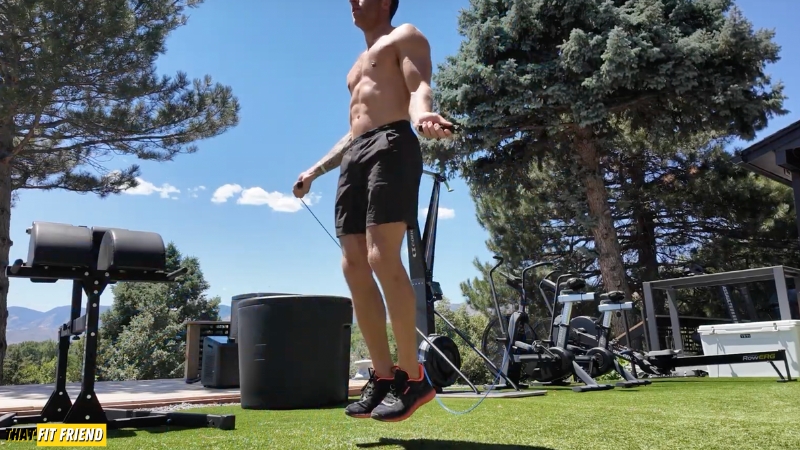

Subjected to too much rain or bad weather, these will break down a bit faster than others. It’s also worth noting that the heel-to-toe drop on the Nano Gym is more noticeable and can leave you feeling pitched forward, something to consider if you’re looking for something with a more natural feel to them.
Bottom Line: The Nano Gym will fit true to size for most narrow and medium athletes. If you have an exceptionally narrow foot or super low volume feet, you may want to size down half a size. It’s hard to beat these for all day wear and comfort. If you spend a lot of time on your feet, want a shoe that can hang with you from lifting to conditioning, and don’t mind the above average heel-to-toe drop, these are the shoes for you.
Best for Minimalist Feel: New Balance Minimus TR V2
You’re either going to love or hate the Minimus TR V2, there’s no in-between. It’s worth noting that the TR V2 blends stability and versatility better than most every other shoe on this list. That said, they didn’t quite work for me. If you’re looking for that minimalist feel with just enough support, this shoe might be your new go-to.
NB Minimus TR V2

Best For
- Recreational Lifting
- CrossFit
- Cross-Training
- Sprints and Short Runs
- Minimalist Lovers
Falls Short
- For Wider Feet (3E+ widths)
- For Toe Box Durability for CF
- For Longer Runs
Sizing Need to Know
- Removable Insole: No insole
- Width: Narrow/Medium
- Narrower Feet Sizing: True to Size
- Flatter Feet Sizing: These have a bit of arch to them.
- Relative Sizing: Go the same size as Puma, Nike, and Adidas.

For More Context
- For More Info: Read My Review
- Good Alternative: New Balance Minimus TR BOA
- New Balance’s Return Policy: Learn more here
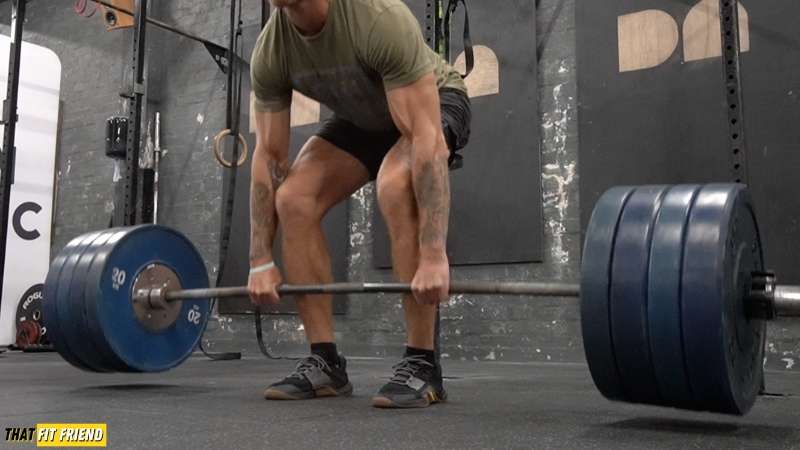
This is one of the more flexible shoes on this list, especially in the forefoot. It also has more toe spring than any other shoe on this list, which makes getting up on the forefoot during cleans or snatches feel easy and natural. You’re not going to be maxing out in these shoes, but for volume work, it’ll be hard to beat them.
If you miss that low-profile silhouette of the old Nike Metcon 3 or 4, the TR V2 hits that same vibe and will feel like an old friend when you slip it on. And the arch support is on point. There is a pretty aggressive taper through the midfoot, usually a dealbreaker for wider feet, but this is about my narrow-footed friends! The arch support combined with a medial sidewall really help amp up the support and stability of these shoes.

There’s no insole in these shoes though. If you don’t fill out the upper volume and really get the midfoot locked down tight, you’ll find yourself sliding around a good bit. And speaking of lockdown, as much as I love the idea of a lightweight tongue, this one is a miss. There’s no gusset keeping it in place and it easily folds and moves if it’s not laid flat and locked down securely. Similar to the PUMA Fuse 4, the heel on the TR V2 is a bit clunky and juts out further than it needs to. Any movement involving heel strike or quick movements and you’ll notice the heel being a limiting factor.
Bottom Line: The New Balance Minimus TR V2 fits true to size. Once you put it on, you’ll learn pretty quickly which end of the spectrum you fall on, love it or hate it. If you love it, it’ll be a great all-around performing shoe for you.
Best Budget Pick: Nike MC Trainer 3
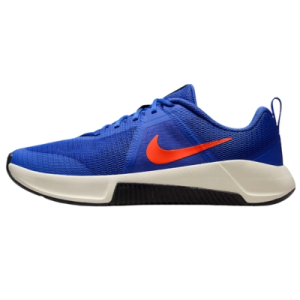
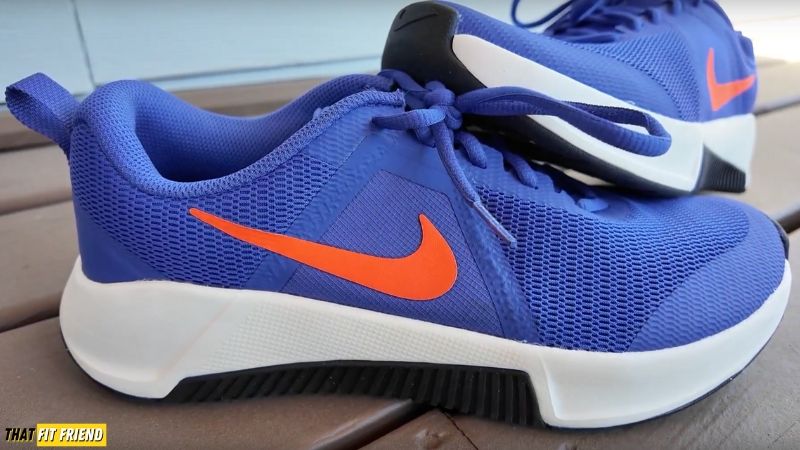
If you want a no-frills gym shoe that fits narrow feet, works for lifting, and costs under $75, the MC Trainer 3 punches well above its weight. I remember when I first reviewed these shoes, I was pleasantly surprised by how much I liked them.
Nike MC Trainer 3
$80
Pros
- Well-Rounded for Price
- Midsole Is Responsive
- Good Outsole Grip
Cons
- Not Great for Flat Feet
- Upper Volume Can Feel Snug for High Insteps
- Heel Can Feel a Little Blocky (Still)
Best For
- Lifting
- HIIT
- Cross-Training
- Budget
Specs
| Heel-to-Toe Drop | N/A (feels like 4mm) |
| Weight | 10.15 oz (size 10) |
| Width | Narrow |
| Lifting Threshold | ~455 lbs |
| Run Distance Threshold | 1-2 miles at one time |
Sizing Need to Know
- Removable Insole: No (light adhesive)
- Width: Narrow/Medium
- Narrower Feet Sizing: True to Size
- Flatter Feet Sizing: These have a bunch of arch to them.
- Relative Sizing: Go the same size as Puma, New Balance, and Adidas.
For More Context
- For More Info: Read My Review
- Good Alternative: Reebok Nano Gym
- Nike’s Return Policy: Learn more here
Nike did a superb job of putting together a budget shoe that didn’t feel like it was made out of spare parts and really over-delivered on its performance.
Underneath, the aggressive lug pattern on the outsole provides excellent grip on every surface you can think of. From turf to rubber flooring to wooden platforms to machines, the MC Trainer 3 is stable and secure. The medium-density foam midsole is super comfortable without being too soft. I’ve lifted over 400 lbs in these shoes without any compression or bottoming out issues. The upper is very breathable and has a lower profile that really helps keep your foot locked in.
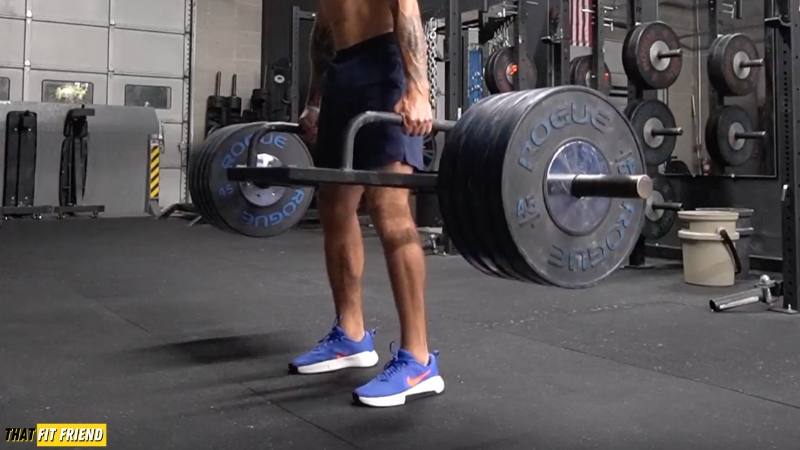

It is a bit stiffer of a shoe. One of the sacrifices made in creating a budget friendly shoe was flexibility through the mid and forefoot. If mobility is a priority for you, these may not be the best pick. The PUMA offers more forefoot flexibility and the New Balance has more midfoot flexibility, for reference. The tongue on this one is also not gusseted, another casualty of budget friendly construction. If you wear your shoes a bit looser like I do, be ready to be fighting that tongue constantly.
Bottom Line: From a sizing and fit standpoint, they fit true to size. And if you currently wear Nike’s, stick to your current size and you won’t miss. These shoes almost transcend the budget category and make a case for themselves as solid training shoes regardless of price point. In terms of all-day comfort, punching above their weight class in terms of performance, and price point, the MC Trainer 3 can’t be beat.
Best for HIIT/Cardio Classes: Adidas Rapidmove ADV 2
The Rapidmove ADV 2 is built to move fast. Unlike its more lifting focused cousin, the Rapidmove 2, the ADV 2 is built with classes, cross-training, HIIT, and cardio at the forefront.
Shop Below, Support That Fit Friend
$120

Pros
- Lightstrike Pro midsole is bouncy
- Good shoe for hybrid workouts
- Great option if you need arch support
Cons
- Boot security can lack for narrow heels
- Not great for flat/extra wide feet
- Lacks stability for heavy lifting
Best For
- Workouts Classes
- HIIT Sessions
- Light Strength Training
- Short Runs (1-4 miles)
- Arch Support Lovers
Specs
| Heel-to-Toe Drop | 5mm |
| Weight | 10.4 oz (size 10) |
| Width | Medium |
| Lifting Threshold | ~245 lbs |
| Run Distance Threshold | <3 miles (at one time) |
ALTERNATIVES
Sizing Need to Know
- Removable Insole: Yes
- Width: Narrow/Medium
- Narrower Feet Sizing: True to Size
- Flatter Feet Sizing: These have a fair amount of arch to them.
- Relative Sizing: Go the same size as Puma, New Balance, and Nike.

For More Context
- For More Info: Read My Review
- Good Alternative: Adidas Rapidmove 2
- Adidas’ Return Policy: Learn more here
The Lightstrike Pro midsole gives it just the right amount of bounce and responsiveness so you feel quick and agile. Got a workout planned with box jumps, interval runs, or fast-paced circuits? The ADV 2 is dialed for just that type of environment.
Similar to the New Balance Minimus TR V2, the toe spring on the ADV 2 is supreme. And when you combine it with the heel bevel at the rear, you get a shoe that transitions seamlessly between classes and short runs for a more hybrid-esque feel. Even better, the unique lacing design helps keep your foot locked in with the bootie-style upper made up of mesh and synthetic overlays. There’s no spill over or sloppy foot movement in this one.

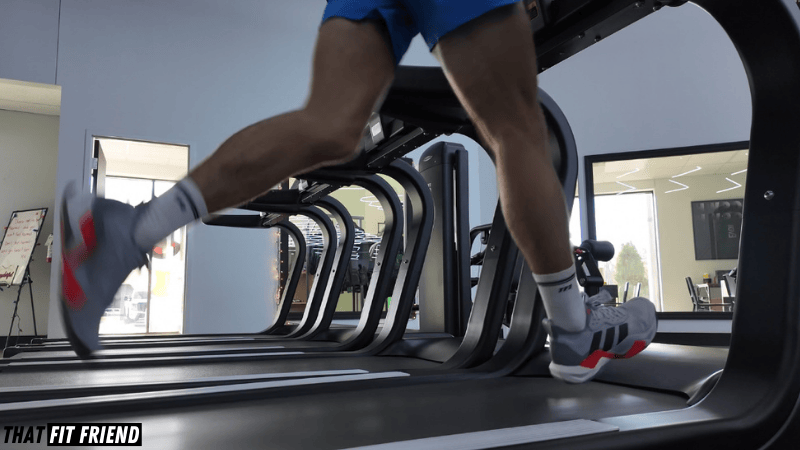
Adidas’s torsion system in the outsole negates its natural flex and articulation. It’s a hit or miss feature. If you want strong arch and midfoot support, you’ll love it. If you want flexibility and mobility, you’ll find it frustrating. And, despite that torsion system, it’s not the most stable. This is especially noticeable on anything single leg or when you start to really push the weight on machines.
Bottom Line: Across all athletes, the Rapidmove ADV 2 fits true to size. It’s definitely the most cardio and class-focused shoe on this list. If your jam is more focused on hitting a class a few times a week and maybe one or two short cardio workouts outside of that, this is the shoe for you.
Best for Lifting/CrossFit: TYR CXT-2
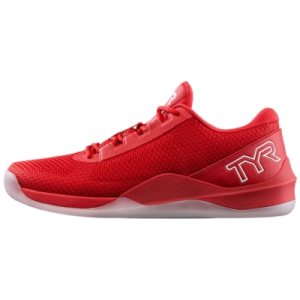
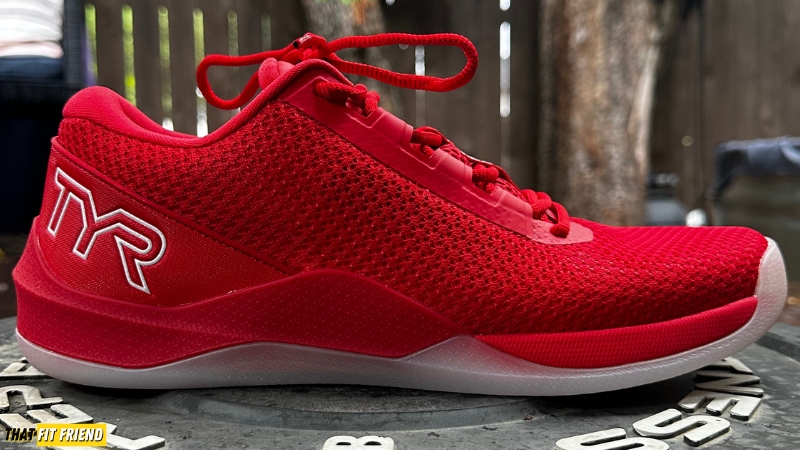
The TYR CXT-2 is a bit of an odd-man-out situation. It’s the widest shoe on this list, and if you’re a narrower footed athlete looking to explore a wider option, this is your pick. The midfoot support, courtesy of TPU overlays on the lateral and medial sides, and the thicker boot give this shoe a really nice hugged, locked down feel.
TYR CXT-2 Trainer
$150
Pros
- Well-rounded performance
- Great durability for WODs and cross-training
- Stable midsole for heavy lifting
Cons
- Not the best option for flat feet
- Normal model still isn't that "wide"
- Tongue can feel a little thick for some
Best For
- CrossFit
- Lifting
- Cross-Training
- Ankle Support
Specs
| Heel-to-Toe Drop | 7mm |
| Weight | 13.1 oz |
| Width | Medium |
| Lifting Threshold | ~550 lbs |
| Run Distance Threshold | < 1 mile |
Sizing Need to Know
- Removable Insole: Yes
- Width: Narrow/Medium
- Narrower Feet Sizing: True to Size
- Flatter Feet Sizing: These have a fair amount of arch to them.
- Relative Sizing: Go the same size as Puma, New Balance, and Nike.
For More Context
- For More Info: Read My Review
- Good Alternative: PUMA Fuse 4
- TYR’s Return Policy: Learn more here
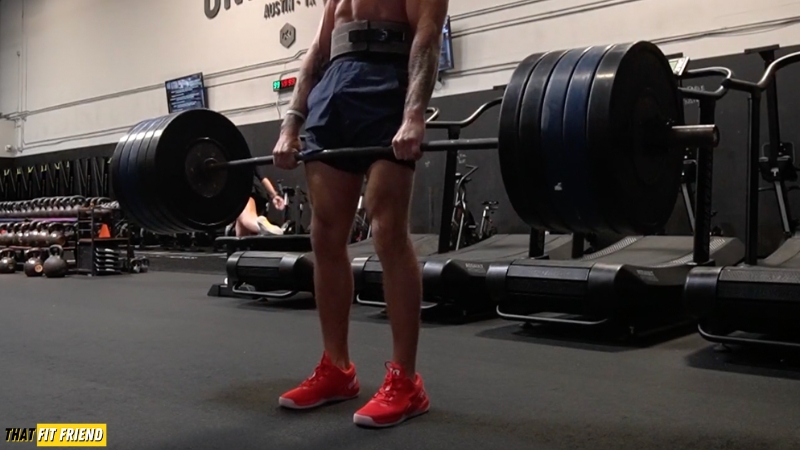
What makes this the pick for my lifting focused friends out there is the SurgeNRG foam midsole. It’s dense enough to handle seriously heavy loads without compressing, and is still nice and comfortable to wear during a more casual lifting session.
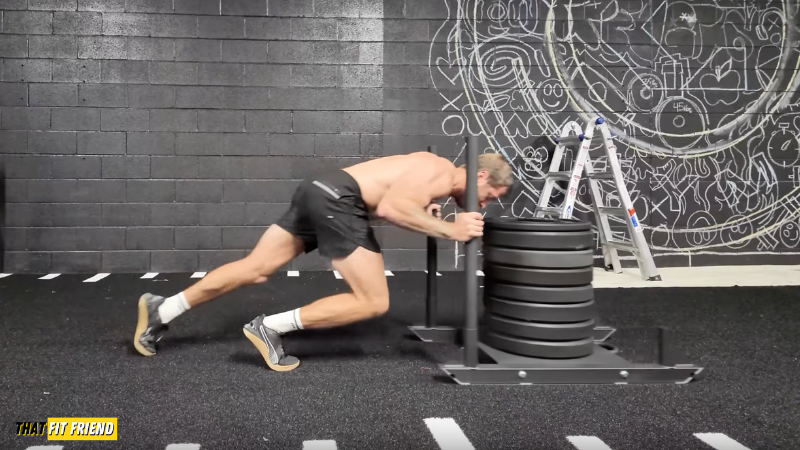
Want to venture outside of traditional lifting? The CXT-2 is durable enough to handle whatever you throw at it. It’s really stood the test of time and held up to all forms of abrasion and scuffing. Everything from CrossFit to sled drags to rope climbs, it hasn’t started to break down yet.
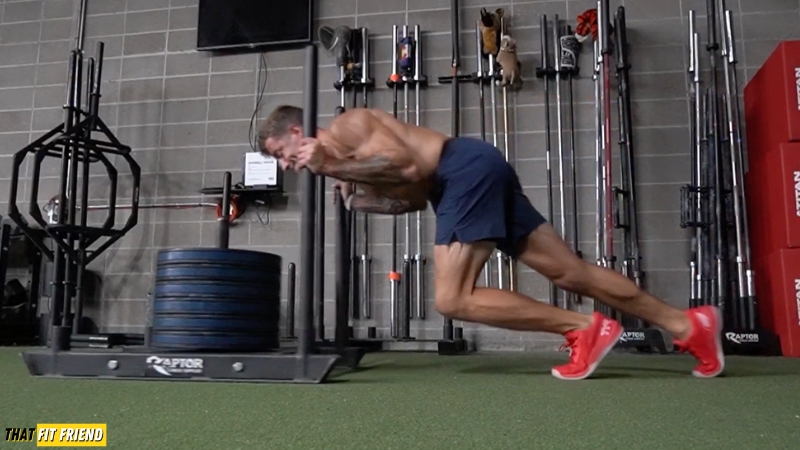
Be warned though, this one isn’t built for speed. Or any running for that matter. Even shorter warm ups or cool downs feel clunky and awkward in the CXT-2. And don’t ask it to get bendy. It starts out stiff and even after a few weeks of breaking them in, the midfoot articulation just isn’t there.
Bottom Line: A true to size fit for most athletes, the CXT-2 is going to be your go-to pick for anything that’s strength and hypertrophy focused. And don’t worry, if you start feeling spicy and want to mix in some cross-training or a CrossFit class here and there, it can take the beating.
How Should Cross Training Shoes Fit for Narrow Feet?
When sizing cross-training shoes for narrow feet, I typically suggest sizing models so you have around .2-6. inches at the end of your toe box. I also use this recommendation for my normal training size suggestions.
This amount of space at the end of your toe box should give each shoe a snug enough fit to prevent heel slip and spacious enough to allow your forefoot and toes to splay.

Additionally, with narrow feet, toe box width is rarely an issue, so you can typically get away with wearing models that are snugger in nature compared to someone who has wide feet.
If you have narrow feet, I’d suggest noting which cross-training shoes and brands fit you best. Generally speaking, companies will make training shoes with relatively similar last constructions.

This means if you find a particular model and company you like, then you can often safely assume that other models in the line and from the company will have similar fits.
Are Cross Training Shoes Good for Narrow Feet?
Cross-training shoes can be great options for narrow feet, depending on the shoe you invest in. Every cross-training shoe is built slightly differently, so finding narrow-foot-friendly models can be key for not only performance and comfort.

There are cross-training shoes that work better for wide feet, flat feet, high arches, neutral-width feet, and the list goes on. If you can find models that align well with narrow feet, then you’ll typically find your performance gets a natural boost from them.
A good example would be having a narrow fit and not realizing this and opting for wider shoes and not realizing they’re not the best for your individual needs. For example, if you have a narrow foot and opt for a Reebok Nano X2, you may feel as if you’re “swimming” in the shoe’s toe box.

The extra room in the Nano could impact your performance due to lack of security, and if you’ve opted for them because “that’s what everyone uses”, then you may be leaving some performance advantages on the table regarding finding better-fitting models.
All that being said, cross-training shoes can be awesome for narrow feet, especially when you find pairs that align with your individual anatomical needs.
How I Test Cross-Training Shoes for Narrow Feet
At That Fit Friend, I have a testing and review system that I take every cross-training shoe through when reviewing models. I use consistent performance tests to add context to my reviews, round-ups, and comparisons.

Some of these tests include performing similar multi-directional exercises, running distances, hitting lifts with particular loads/thresholds, trying shoes for similar HIIT-focused workouts, and more.
Once I’ve performed my consistent tests, I’ll get more niche with training shoes depending on their construction, fit, and intent. For example, if a shoe is built for classes, then I won’t get as specific with CrossFit-specific testing, and this is why I truncate the models above into different categories.

By noting the additional specifics, I can build lists like this for narrow feet because I know the variance and context in different training shoes, so I can hyper-focus on narrow feet-friendly models.
Some factors I consider when taking shoes through my consistent and specific tests include some of the following.
- Midsole Stability and Responsiveness: What is the stability threshold of certain shoes? How responsive is the midsole for particular types of exercises and workouts?
- Outsole Grip, Durability, and Versatility: Does the outsole provide adequate traction on different surfaces? Does it protect the midsole?
- Width and Length: How does a shoe fit for particular types of feet? What type of feet will find a particular model comfortable and uncomfortable?
- Upper Durability and Breathability: Is the upper construction durable? If not, in what contexts does it fall short? Is it breathable enough for hot outdoor sessions?
These are just a few questions I try to answer when performing and building out my cross-training shoe reviews. As models get more specific, so do my questions and performance tests.
Takeaway Thoughts
There are countless cross-training shoes on the market, and finding the perfect pair should be a matter of finding models that best suit your individual fit and performance needs. The days of wearing poor-fitting training shoes need to be over.
Above are some of the best cross-training shoes I’ve worn and tested if you have narrow feet. These models will work well for those with slimmer feet, and each model performs slightly differently.
If you have additional questions on any of the cross-training shoes for narrow feet mentioned above, please don’t hesitate to reach out via the comments below or to me personally via Instagram (@jake_boly or @that_fit_friend).
Also, if you have additional narrow feet cross-training shoes that you love that didn’t make this list, let me know which shoes I should review, test, and consider next.


Hazel Brutsche
Hi Jake! I’m a woman with narrow feet as well as low ankle bones. If I were to choose one of your recommended shoes, which ones have the softest sides? That’s the only way I can be sure that the shoes won’t dig into my ankles. Thanks in advance!
Ohhh, I’d try the MC Trainer 3, Minimius TR V2, UA Halo Trainer, or Inov8 F-Fly (slightly wider toe box, but nice heel). Those would be good starting points to explore!
Christine Girone
Hi Jake, I’m a woman (middle age but still going!) with narrow feet and all the same struggles as you mentioned above, over-cranked laces and still slipping and sliding. I used to do Crossfit in the Nike Metcons (7 years ago-too wide) and have switched over to more HIIT, cardio classes with some gym time thrown in to build up the bone density. I see your narrow shoe recommendations above for men. I have yet to find a womens’ review for narrow feet with the same expertise/deep dive as you. (Where are you, women?) So my question is this: would your reviews generally apply to the womens’ version of the same shoes you recommend? I assume it’s a place to start at least…
Yeah, should generally apply the same! A lot of companies these days are building their trainers unisex, so sizing and fit wise, shoes will feel similar and it’s just a sizing conversion to size properly. I also try to keep a pulse on YouTube comments from women on various shoes to help inform picks as well.
In re: More in-depth reviews from others: It’s hard. Not to doomsday here, but publishing is a dead art with the boom of AI and Overviews, so the voices in long-form content will only continue to cease to exist, sadly. Big media companies are shells and their “reviews” are just adverts and to be a small publisher it’s tough to make any form of living off of it.