

That Fit Friend is reader-supported and may earn commissions through affiliate links. We also work with select brands on paid editorial partnerships. These relationships do not influence our testing methodology, product ratings, or recommendations. Read more here!
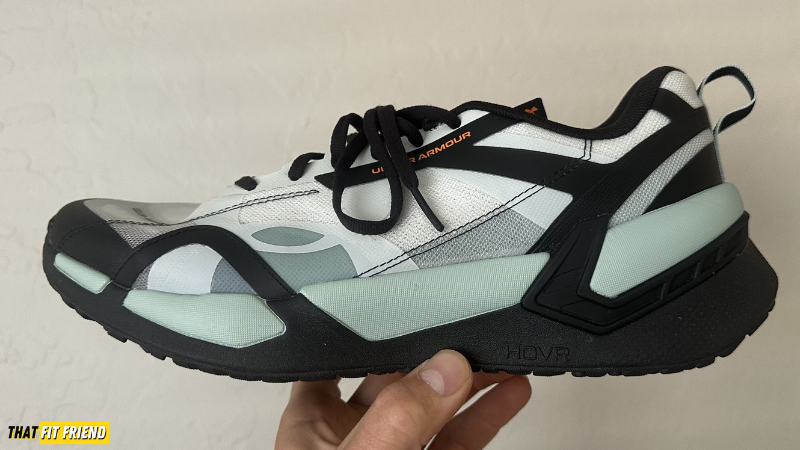
The Under Armour Reign XT is one of those models that has created a bit of curiosity in the training shoe space, especially if you’ve spent time in shoes like the Tribase Reign 6 or the Halo Trainer. On paper, it looks like it sits between those two — and after training in this model, that’s exactly how it feels.
The Reign XT blends stability-oriented construction with a geometry that’s built to move a bit better during athletic-style sessions. It’s not trying to be a max stability cross-training shoe, and it’s not trying to be an ultra-plush class/HIIT shoe.
Instead, it’s Under Armour’s hybrid approach for athletes whose workouts include lifting, jumping, short runs, and general cross-training. If you’re trying to decide whether this model fits your training style, let’s break down where it performs best — and where it may fall short.
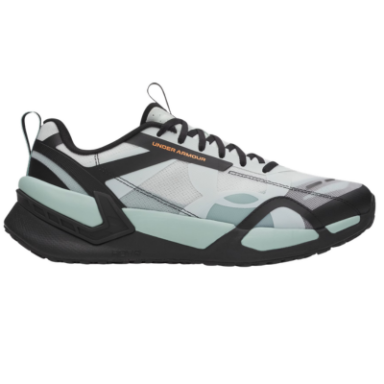
UA Reign XT
$130
Pros
- Good midsole bounce
- Breathable upper
- Versatile performance
Cons
- Can feel a little narrow
- Tongue durability is so-so
Best For
- Classes
- Light/Moderate Strength
- HIIT
- Hybrid Workout Sessions
Specs
| Heel-to-Toe Drop | 8mm |
| Weight | 11.7 oz (size 10) |
| Width | Medium |
| Lifting Threshold | ~365 lbs |
| Run Distance Threshold | 1-3 miles (at one time) |
Who Should Buy the Under Armour Reign XT?
- You want a training shoe that blends lifting support with athletic versatility. The midsole and outsole construction provide enough structure for some moderate lifting (I’ve tested up to 385 lbs) while still allowing you to move dynamically through plyos and agility work.
- You enjoy a higher drop and slightly forward training posture. The 8mm drop and rocker geometry create a more responsive transition when moving between exercises or sprint intervals, so if you’re doing class-style workouts often, these will hit.
- You’re already familiar with the Reign line and want something more adaptable. This shoe works well as a complement to the TriBase Reign 6, which is flatter and more stable. If you rotate footwear depending on session type and like Under Armour, these can be a solid move.


Who Shouldn’t Buy the Under Armour Reign XT?
- You have flat feet or dislike midfoot pressure. The arch in these and their taper may feel intrusive if you prefer flatter platforms. I noticed them fairly fast and I have a normal arch. If you have flat feet, you’ve been warned.
- You need or want a wide toe box. The toe box taper could feel restrictive for wider anatomies. I have an E/EE width foot and wish these were wider.
- Your training is heavily lifting-focused. If max stability is your priority, this should go without saying, but this model will obviously fall short. Look into models like the TriBase Reign 6, Metcon 10, or Dropset shoe lines.
Sizing and Fit Thoughts
About My Feet: I have a normal arch/instep and my feet come in at an E/EE width. The length of my left and right foot are consistent with one another, and I size as a true US 10 for most companies’ sizing charts.
Fit Breakdown
- Narrow (<D) feet: True to size
- Medium (D) width: True to size
- Wide (E-EE): True to size
- 2E+: Consider half-size up or pass.


I’d size this shoe similarly to your Nike, Reebok, or other Under Armour trainers. The upper has decent volume, but the forefoot taper can create snugness for wider feet.
For flatter feet or anyone sensitive to arch pressure, I’d test these indoors first and keep them clean in case they’re not the right match, so you can return them easily.
Performance Assessment
Solid Option for General Lifting: 8/10
In my sessions so far, the Reign XT has felt stable enough for most general strength work. As I write up this section, I’m writing it from a lens of knowing this shoe isn’t exclusively built for heavy strength work — hence why they still get an 8/10. They do a good job for cross-performance.
The dual-density HOVR midsole gives you a slightly firmer base when weight is loaded, and the TriBase component helps keep the midfoot from collapsing excessively. I’ve deadlifted up to 385 lbs in them and they got the job done. I don’t love their stack height for deadlifts, but it can work in a pinch.

That said, I wouldn’t choose this shoe for max-effort squat or deadlift days that comfortably exceed 365 lbs, but the Reign XT handled the following movements just fine:
- Dumbbell lunges
- Romanian deadlifts
- Machine work
- Accessory barbell lifts
- Kettlebell training
For athletes doing hypertrophy-focused lifting or mixed programming, this level of support should feel perfectly serviceable.
Performs Well in Cross-Training Settings: 8.3/10
This is where I think the Reign XT starts to shine a bit more. On the hybrid shoe spectrum, this shoe sits a little off the middle towards the versatility and cross-training end. The midsole responsiveness combined with the outsole grip makes it comfortable to transition through multi-directional movements.


The shoe felt controlled and stable without feeling overly rigid. The structure of the upper also helped with lockdown when decelerating or planting. They worked well for workouts that included things like:
- Box jumps
- Broad jumps
- Sled pushes
- Lateral shuffles
- Burpees
It runs slightly stiffer than some softer class trainers, but that firmness contributes to better power transfer during explosive work.
Capable for Short Running Intervals: 7.9/10
The geometry of this shoe — particularly the heel bevel and toe spring — makes it workable for short treadmill intervals or indoor sprint work.
I wouldn’t classify it as running-friendly beyond gym-based distances, but for workouts that include bursts of running between stations or short intervals, it performs adequately. The midsole is responsive and comfortable enough to get by for distances ranging from 400m to 2-3 miles.
Halo Trainer vs Reign XT: Which to Buy
At a glance, the Halo Trainer and Reign XT can look pretty similar, but they’re built with different priorities in mind once you actually start training in them. I look at these two less as competitors and more as options for different session types depending on how your programming is structured.
The biggest distinction I’ve noticed is in how each shoe handles underfoot feel. The Halo Trainer leans more toward comfort and forgiveness. Its softer midsole gives it a smoother ride when you’re doing workouts with more running, jumping, or class-style pacing where you’re constantly moving. If I’m heading into a session with longer transitions, warm-up jogging, or something like circuits that include sustained cardio, that plushness is noticeable and appreciated.


The Reign XT, on the other hand, has a slightly firmer and more structured ride. The dual-density setup and midfoot stability elements make it feel more grounded when weight is involved. During strength-focused cross-training or mixed sessions where I’m rotating between lifting and athletic work, I find it provides more confidence through planted movements and controlled deceleration. It doesn’t feel harsh — just more dialed toward stability than comfort-first cushioning.
Upper construction also plays a role in differentiating the experience. The Halo Trainer’s lighter, more relaxed upper promotes freedom and breathability, which can be great for comfort-focused sessions but sometimes comes at the cost of lockdown. The Reign XT takes the opposite approach with more layering and structure, creating a more secure wrap that I notice during lateral cuts, sled work, and explosive transitions. It’s not necessarily better — just built for a different type of demand.

Geometry is another deciding factor. The Halo Trainer’s lower drop creates a flatter training posture that may appeal to athletes who prefer ground feel or a more neutral stance. The Reign XT’s higher drop and rocker characteristics give it a slightly more forward-moving sensation that some athletes enjoy for athletic-style training and quicker transitions.
If I were simplifying the decision:
- I’d reach for the Halo Trainer on days centered around comfort, running intervals, or class pacing.
- I’d lean toward the Reign XT when the session blends lifting with athletic work and I want a bit more structure underfoot.
Neither is replacing the other — they simply serve different roles depending on how you train.
Reign XT

Halo Trainer
Construction Details
The Reign XT features layered construction aimed at providing structure and durability while maintaining enough flexibility for dynamic training.
The upper uses a textile base reinforced with synthetic materials across high-stress zones. Around the toe box, an extended rubber wrap climbs upward to provide abrasion protection and durability during exercises like burpees or sled pushes. TPU overlays along the medial and lateral sides add lateral stability, helping secure the foot during multi-directional movements.

Around the heel, a TPU film wraps the rearfoot to improve lockdown and structure, while the padded mesh boot creates a comfortable and secure entry. The tongue uses a padded mesh design that sits comfortably across the top of the foot, and the six-eyelet lacing system allows for a fairly dialed-in fit when tightening down the midfoot.
Moving underfoot, the midsole uses a dual-density HOVR foam construction. The top layer offers a slightly softer feel for comfort and responsiveness, while the denser base layer provides stability when loading weight or performing explosive movements. This layered approach is designed to balance cushioning with support across different training demands.
The outsole uses a full rubber layout with raised traction lugs that provide grip across gym flooring surfaces. Embedded within the midfoot is Under Armour’s TriBase TPU component, which enhances stability by reducing torsional flex and helping maintain a planted feel when pushing through lifts or quick directional changes.
Final Thoughts: Would I Buy Again?
The Under Armour Reign XT fills a useful role within a broader training rotation. It’s not replacing more specialized footwear, but it delivers a balanced experience for athletes whose workouts combine strength work with athletic movement.
For hybrid-style programming, it makes sense as a supplemental trainer that can handle multiple gym demands without leaning too far in one direction.
If you’re unsure whether this shoe aligns with your training style or foot anatomy, drop a comment below or reach out to me directly on Instagram — always happy to help guide the decision.



Pablo
Hey Jake,
Amazing content as usual! Just wanted to ask you a question on what shoe might be better for me.
So, I am a casual gym guy (I train 2-3 times a week) and I mainly focus my training on machine work, light weightlifting, and may be incorporating some moderate leg work soon (squats, deadlifts… that stuff). Just wanted to point put that I’ve had some knee injuries in the past and need a shoe that can help me, let’s say, ‘protect’ my knees from high impact movements.
I was looking to buy the new Nano 5s because they are the perfect all-around shoe, but was wondering if I can find sth similar at a more affordable price.
Cheers!
Hey!
The Nano X5 could be a good starting point. I’d say start there and assess, then once we have more data, we can shift gears if we need.
Also, important to keep in mind that shoes alone won’t “protect” the knee, per se. A well-balanced program with a focus on building the structures around the knee can help a ton — and don’t forget to get barefoot here and there to train the feet!