


That Fit Friend is reader-supported and may earn commissions through affiliate links. We also work with select brands on paid editorial partnerships. These relationships do not influence our testing methodology, product ratings, or recommendations. Read more here!
When a brand like PUMA keeps showing up in the training shoe world, you can’t help but want to root for them. The Fuse line has had moments of potential, with versions 2 and 3 showing that PUMA was starting to understand what lifters and cross-trainers were actually looking for.
So when the PUMA Fuse 4 dropped, I was optimistic (read: cautiously). A refined upper? Updated midfoot? Still under $120? It sounded like they might finally nail it.
Unfortunately, this shoe feels like a lateral step…maybe a small step forward? From the moment I put them on, I was disheartened. It’s narrower than before — which is good for narrow feet(!), a little more restrictive regarding its upper volume, and it still features the drop-in midsole that, while promising on paper, might have you second-guessing your purchase mid-set.
If you’ve got a wide foot or want a shoe that can do more than just stand still under a barbell, you’ll probably want to keep looking. Now, this isn’t to write off the Fuse 4 entirely because I do think there’s a subset of athletes for whom these make a ton of sense, and my job here is to help you contextualize that. They’re just not going to be the shoe that makes us all believers in the PUMA Fuse line…yet.
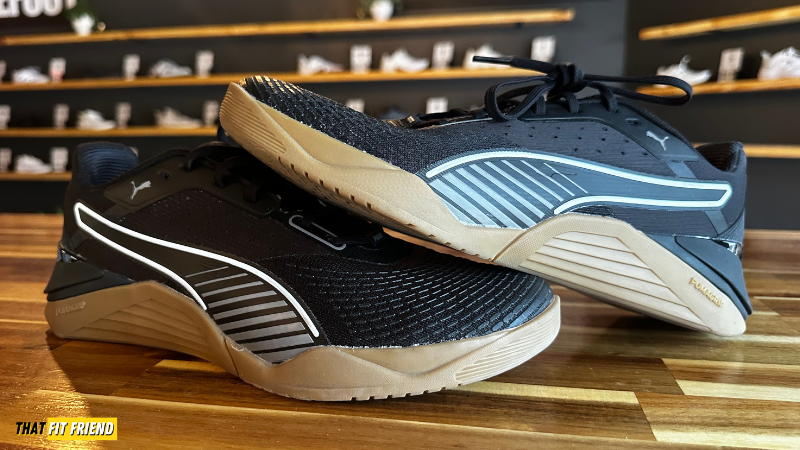
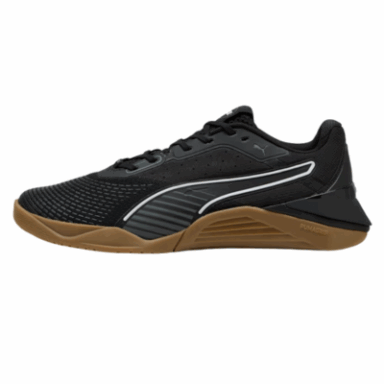
PUMA Fuse 4
$120
Pros
- Great for narrow feet
- Awesome outsole grip
- Good upper security
Cons
- Fairly heavy
- Heel can be clunky
- Lacks breathability
Best For
- CrossFit
- Recreational Lifting
- Narrow Feet
- Cross-Training
Specs
| Heel-to-Toe Drop | 4mm (estimated) |
| Weight | 14.75 oz (size 10) |
| Width | Narrow |
| Lifting Threshold | ~455 lbs |
| Run Distance Threshold | <1 mile (at a time) |
Who Should Buy the PUMA Fuse 4?
These are definitely not for everyone, and I’ll explain why in a second. That said, they may still be worth checking out if…
- You’re primarily focused on strength and hypertrophy training and have a narrower foot. The lockdown is awesome on these for this foot anatomy.
- You liked previous Fuse models and want something even more locked in. They’re consistent, and the lacing structure feels much better on these.
- You want something more structured and grippy for light cross-training. For my athlete friends, these are great if you’re primarily hitting heavy sled pushes and explosive movements.


Who Shouldn’t Buy the PUMA Fuse 4?
These are going to be a pass for you if…
- You have a 2E foot width or wider, or have a thicker instep and need more upper volume. The drop-in midsole and low-profile upper are big misses for high insteps. Look into the F-Lite or VIKTOS Core Containment for these asks.
- You do a lot of sprints and want a lighter weight shoe for sprints and a bunch of jumping. These can feel heavy with their drop-in midsole, and the heel is clunky like the Nike Metcon 9’s.
- You need something that can easily transition from training to everyday use with comfort. These are no Haze Trainer when it comes to daily wear functionality.
Fit and Sizing Suggestions
About My Feet: I have a normal arch/instep and my feet come in at an E/EE width. The length of my left and right foot are consistent with one another, and I size as a true US 10 for most companies’ sizing charts.
Fit Breakdown:
- Narrow (<D) feet: True to size.
- Medium (D) width: True to size.
- E width feet: True to size, but expect a snug fit.
- 2E+ width feet: Pass altogether, don’t bother sizing up.

My normal size 10 ran true to length, but the real issue was the width and upper volume. Both were uncomfortably tight and I don’t have a crazy high instep or a super wide foot.
If you dare, the drop-in midsole can be removed for a little bit of extra room through the mid and forefoot. This also gives this shoe a much more minimalist/barefoot-esque fit and feel. I’ve done this before with my Reign 6 and it’s awesome, but buyer beware, it changes the entire mechanics of the shoe’s fit and feel.

I’d suggest using a slightly thicker insole or orthotic if you do this or using an insole like the BOOMERANG insole from Inov8 for a little more protection and cushion.
Anyone with D and E-width feet and narrower should be okay if they like a snug fit, but if you’re 2E or wider, or used to shoes with a wider toe box, this one will be a serious struggle.
Performance
Stable and Consistent Lifter
Stability under the bar is probably the strongest use case for the Fuse 4, but even here, there are caveats. I worked up to a 225 lb Zercher squats and 425 lb deadlifts, and the shoe felt solid enough on the ground to accommodate these lifting asks.

However, I could already feel at 225 lbs, that drop-in midsole beginning to compress a bit when walking out weight. It won’t be an amount that kills your stability, but I did notice it. With more static strength work like deadlifts and leg presses it’s not as apparent. The narrowness of the shoe made it difficult to maintain comfort under heavier loads, too, but that’s because of my toe splay limitations. Narrow feet should have no issues here.
The full rubber outsole was incredibly grippy on every surface in the gym. For my machine-focused accessories, these performed great. There was no slippage on the machine surface and my feet felt connected through the whole movement. Again though, if you’re going to push the weight on something like a leg press, be ready for that midsole to compress.

For your general strength and hypertrophy training, light-to-medium barbell movements, dumbbell work, kettlebells, and machines, these are perfectly suitable. Provided you have a narrower foot. Otherwise, you’re going to be fighting your shoes before you finish your warm-up.
Suitable Cross-Trainer
This is where the Fuse 4 starts to confuse me. In theory, the grip and low-profile design should make this a decent cross-trainer, and it is solid for certain things. For example, they’re great for sled work and heavy forefoot work like jump rope.
But in reality, the heavier weight along with clunky, blocky heel and narrow forefoot make dynamic movements awkward for me. I can see where the stiff heel might help in wall walks or handstand push-ups in CrossFit WODs, but lateral shuffles, jumps, and agility drills feel off-balance and constrained. It just feels like this shoe is confused on its identity and is missing a massive market by trying to be too CrossFit-y in a cross-training shoe’s silhouette.

If you do traditional bodybuilding circuits with some cross-training mixed in or hit WODs that don’t involve a ton of running and jumping, they’ll hold up okay. Just don’t expect versatility for athletic movement.
Short Runs Are So-So
These can technically work for some short interval runs on a curved treadmill or regular treadmill. If you’re keeping your distances to 200-800 meters you’ll probably be okay in these. Mind you, forefoot strikers will be WAY better off. Heel strikers, forget about it.
That said, I wouldn’t recommend these for anything more than a quick warm-up jog or some sprint sled work. The tight fit and lack of breathability made even basic movement feel overly stiff. They feel more like a throwback indoor soccer shoe with a less functional construction than a true hybrid trainer. If short runs or intervals are a big part of your programming, look elsewhere like the Inov8 F-Fly or Adidas Rapidmove ADV 2.
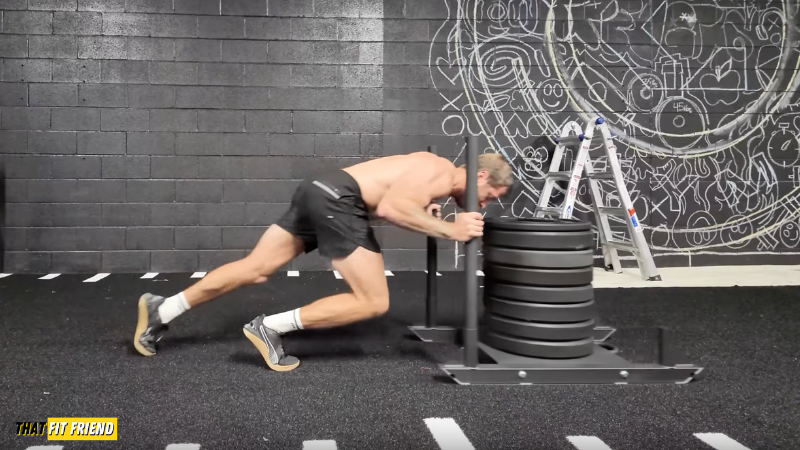
Pass On These Most Daily Wear Contexts
Hard no for me here.
I wore these for the entire week in lead up to my soft opening of my That Fit Friend store at Coalition Gym, and my feet were dying by the end of each day. Throughout the day, I found myself slipping my heel out and sliding my foot back just to relieve some of the pressure.
The narrowness alone would’ve been enough, but pair that with the drop-in midsole pressing upward into the foot and you’ve got a recipe for some discomfort when wearing these all day. Even for coaches or gym-goers who are just standing around, this is not a daily driver I can recommend, especially if you have a high(ish) instep or wider foot.
Construction Details
The upper uses a breathable mesh base layered with 5D PWRPRINT (haptic TPU overlays), which is designed to reinforce the upper and prevent material spillover during lifts. While this does enhance lateral support, it also reduces flexibility and makes them more difficult to break in. If you have a high-volume foot, expect to feel clamped in. And not in a good way.


The drop-in midsole offers decent cushion and feedback under load, but it also lifts your foot into the upper and makes an already cramped shoe feel even tighter. The removable drop-in midsole adds some versatility, but in practice, it just makes an already cramped shoe feel even tighter.
Underfoot, you get a full rubber PUMAGRIP outsole with FUSEFLEX grooves for traction and slight flexibility. This is one of the best features of the shoe, with excellent grip across turf, rubber floors, and wood platforms. The outsole extends up the toe a bit for added durability and blends into the reinforced hard rubber on the heel, reinforcing the boot support. The heel itself is clunky and blocky. It reminded me of the Nike Metcon 7–9 models, and feels similarly awkward during dynamic training.


The lacing system includes five core eyelets with a sixth lace-lock option, and a tongue loop for added midfoot security. Heel-to-toe drop is listed at 4 mm, keeping you relatively flat to the ground.
Final Thoughts: Would I Buy Again?
After one full training day and an entire day on my feet, the PUMA Fuse 4 is a pass for me. While I appreciate the grip and the platform’s initial stability under moderate load, the overly narrow fit, clunky heel, and tight upper volume make this shoe hard to recommend. Especially when there are better options in the same price range.
If you loved previous Fuse models and have a narrow foot, it might be worth a shot. Be warned though, it’s even narrower than the Fuse 2 and Fuse 3 were.
For everyone else, especially wide-footed lifters or hybrid athletes, there are better picks out there.
A full review will follow once I put more mileage on these, and I’m open to being proven wrong. But for now, the Fuse 4 isn’t making the rotation, and unless it breaks in dramatically, it’s hard to see that changing.



Matt
thanks for the comment on the width! you saved me.
Welcome!