

That Fit Friend is reader-supported and may earn commissions through affiliate links. We also work with select brands on paid editorial partnerships. These relationships do not influence our testing methodology, product ratings, or recommendations. Read more here!
I’m always excited when STIKE MVMNT builds mid-top shoes, and I think that stems from my initial love for their Chill Pill Mid. When I saw the Transit StreetTrainer Mid, which was the extension of my beloved StreetTrainer — I was hyped.
What’s cool about this model is that it takes a super unique approach to training shoes. It’s a shoe built for the gym, but also for skating. That limits this shoe’s reach in some ways. However, it also adds a nice level of depth to its construction and use cases.
As a VERY recreational skateboarder who likes mid-top shoes and lifting, I would call this model my catnip. In that context, it ticks a lot of my interests and looks pretty good. Is their performance good, though? That’s what I wanted to know.

Who Should Buy This Shoe?
- Hybrid Shoe Enthusiasts: For athletes seeking a shoe that transitions seamlessly between training sessions and casual wear, the Transit StreetTrainer Mid offers exceptional versatility. The SpectraFoam midsole and variable outsole pattern provide good performance across multiple training environments while maintaining all-day comfort.
- Mid-Top Lovers: Those who appreciate the aesthetic and support of mid-top designs will love the Transit Mid’s ankle support. Unlike many high-top training shoes, this model allows for both loose and tight lacing configurations, which is a subtle detail that can make a big difference.
- Comfort-First Athletes: In the context of STRIKE training shoes, the SpectraFoam midsole in the Transit provides a more cushioned ride compared to the Haze trainer, making it ideal for those who prioritize all-day comfort. The anatomical toe box and medium-to-wider fit also work for a nice range of foot anatomies.
Who Shouldn’t Buy This Shoe?
- Exceptionally Wide-Footed Athletes: While accommodating up to 2E width, those with 3E+ feet should approach with caution. The anatomical toe box provides good width, but the midfoot may feel restrictive for exceptionally wide feet.
- Those Who Train In Hot Weather Often: The thicker upper construction, which is good for security and skating can run a little warm. Athletes training in high-temperature environments or those prioritizing maximum breathability should consider alternatives like the F-Fly, Haze, or the Adidas Dropset 3.
- Lifters With a BIG Strength Bias: Athletes focusing purely on heavy lifting might prefer the firmer platform of the Haze trainer. While the Transit Mid handles weight well, its hybrid nature means some compromises in maximum stability for daily wear comfort.

Sizing and Fit Recommendations
Size these similar to your standard training shoes from Nike, Adidas, or Reebok. The anatomical toe box and medium-to-slightly-wider fit accommodate most foot types without sizing adjustments.
Narrow Feet (<D)
- Sizing Advice: Go true to size.
- The upper design provides a secure lockdown without excess material bunching.
- The mid-top construction prevents heel slip even with narrower feet, IMO, and the tongue maintains position regardless of lacing tension.
Medium-Width Feet (D-E)
- Sizing Advice: Go true to size.
- The anatomical toe box allows natural toe splay while maintaining midfoot security.
- Multiple lacing configurations accommodate different foot volumes well in the medium-width range.

Wide Feet (EE+)
- Sizing Advice: Go true to size for EE. 3E+ may want to pass.
- The midfoot taper may also feel snug on 3E+ width and flatter feet.
- Thicker feet may also have a tough time unlacing and relacing every time in these. It’s more of a battle to get them on for you.
Specs to Know
- Heel-to-Toe Drop: 4mm
- Weight: 12.45 oz (for my size 10)
- Removable Insole: Yes
Transit StreetTrainer Mid
$145

Pros
- Comfortable for daily wear
- Good versatility in the gym
- Nice structure to the boot
Cons
- Lacks for running in gym
- 3E+ width feet may find them snug
- Breathability can lack at times
Best For
- General Strength Training
- High-Top Lovers
- Casual Cross-Training
- Skate/ & Training Focused Individuals
Falls Short
- Long Runs <1 Mile
- Classes/HIIT-Only Individuals
Performance Assessment
Lifting and Cross-Training Thoughts
The Transit Mid well has its versatility in most of my training tests, which makes sense when you consider it’s built for skating. Throughout my testing, the variable outsole was exceptionally grippy across different surfaces, from rubber gym floors to wooden platforms.

During sled pushes and dynamic movements, the shoe did well with traction and didn’t show early signs of wear. I also like that I can wear these looser when training for strength and snugger when I’m cross-training in them.
During Olympic lifts and dynamic movements, the shoe allows decent ankle mobility, which other high-top models fall short of. For example, when hitting lunges, split squats, and plyos like broad jumps, I never felt like the ankle of this shoe was limiting my mobility.
Thing I Enjoyed
- The variable outsole pattern and its grip on different surfaces, along with its durability.
- The mid-top design provides customizable ankle support while maintaining mobility.
- The anatomical toe box allows natural foot splay during heavy lifts. For my leg days, I never felt too cramped in this shoe, and I have an E/EE foot width.
- The gusseted tongue ensures consistent placement during dynamic movements, especially when cranked tight.
- The SpectraFoam midsole did a good job with stability up to 455 lb deadlifts and 555 lb leg presses.

Where I Found Limitations
- The thicker upper construction creates noticeable heat retention during longer sessions.
- The cushioned midsole may feel less stable than denser trainers.
- The lacing system requires extra attention when transitioning between configurations.
- The higher stack height impacts the ground feel compared to minimal trainers.
- For maxing out deads and squats over 500 lbs, you may want to find something denser and more dialed for those thresholds.
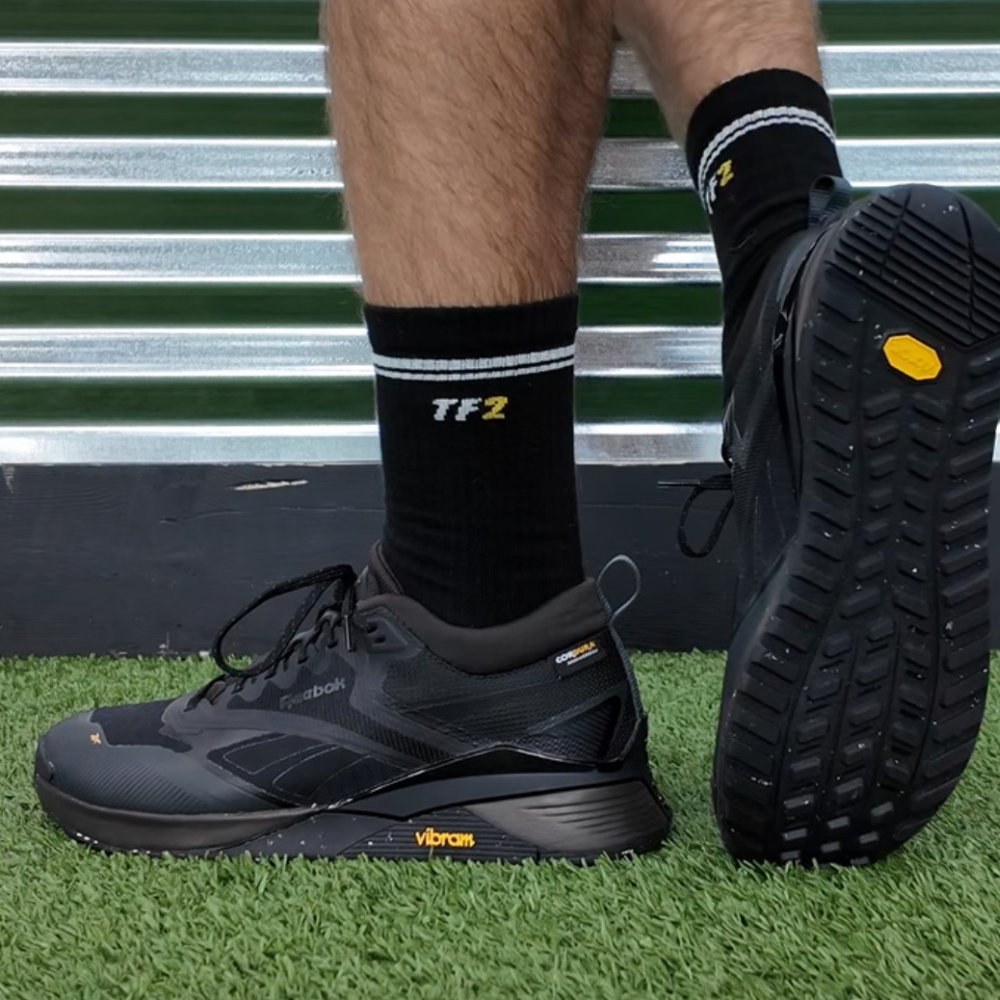
Want to support your favorite shoe review site? Grab some That Fit Friend socks! These socks offer the perfect blend of comfort and performance.
- Check Em Out: That Fit Friend Socks
Construction Details
Upper
- Multi-layered suede and mesh design incorporating durable materials for abrasion resistance
- Gusseted tongue construction prevents tongue slide during movement
- Strategic reinforcement in high-wear areas enhances durability
- Minimal branding maintains a clean aesthetic while adding subtle support elements

Midsole
- SpectraFoam provides responsive cushioning while maintaining stability
- Stack height attempts to balance ground feel with impact protection
- Full-length SpectraFoam cushioning designed for versatile performance
- Anatomical shape supports natural foot mechanics
- Foam density tuned for mixed-modal training demands and is left open on heel for expansion during impact

Outsole
- Variable traction pattern optimizes grip across different surfaces
- Full rubber outsole coverage for durability and protection
- Strategic flex grooves support natural foot movement

Final Verdict: Would I Buy Again
I absolutely would.
If you’re a high-top training shoe lover, you’ll like this shoe. At its core, this shoe excels with more versatility than NOBULL High-Tops, GORUCK Ballistic Mid, and Nike Blazer Mids, to name a few.
The combination of the midsole, variable outsole pattern, and well-put-together upper gives the Transit Mid an edge. I also really like the tongue construction and security, as well as how you can wear these loose or snug.
However, this versatility comes with trade-offs. The thicker upper does run warm during long sessions, and the cushioned midsole may feel less stable than pure training shoes during maximum-effort lifts.
That all said, for athletes seeking a single shoe that can handle training, skating, and daily wear, the Transit Mid does a good job.
If you have additional questions on this shoe, drop a comment below or reach out to me via Instagram!




Add a Comment